











When you open your VPN app settings, you are often faced with a confusing list of options like “OpenVPN (UDP),” “WireGuard,” or “IKEv2.” These are known as VPN protocols, and they are the set of instructions that determine exactly how your data is routed and encrypted between your device and the VPN server. Choosing the right protocol is critical because it directly impacts your connection speed, stability, and security level.
In the past, users had to choose between speed (PPTP) and security (OpenVPN). Today, the debate has shifted to the modern battle of OpenVPN vs. WireGuard—the old reliable standard versus the lightning-fast newcomer.
What is OpenVPN? (The Gold Standard)
Released in 2001, OpenVPN has been the industry standard for over two decades. It is an open-source protocol that uses the OpenSSL library for encryption and can run on both TCP (Transmission Control Protocol) and UDP (User Datagram Protocol).
What is WireGuard? (The Modern Challenger)
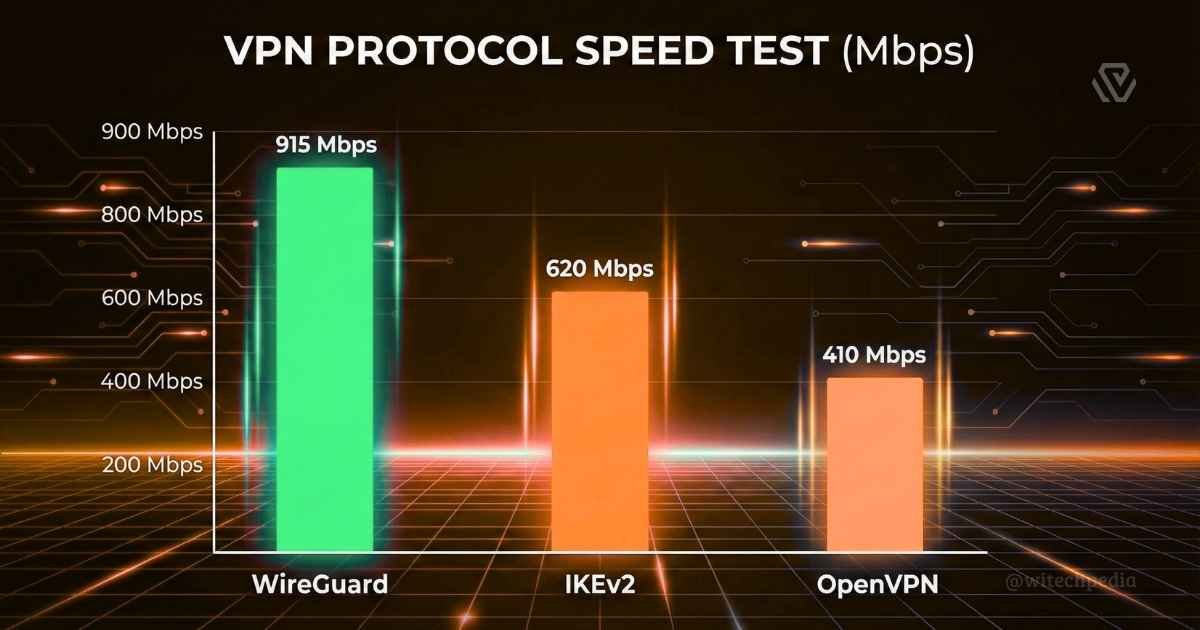
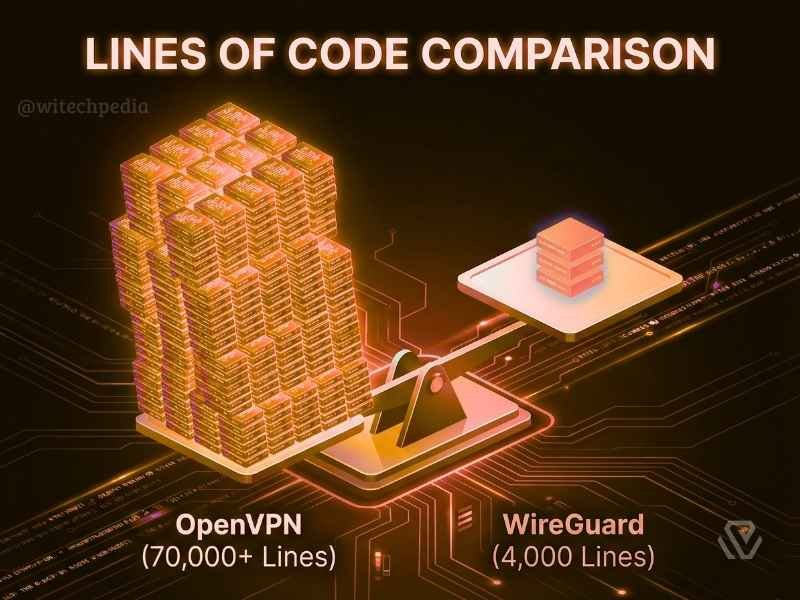
WireGuard is the modern challenger that has revolutionized the VPN industry. It was designed to be faster, simpler, and leaner than IPsec and OpenVPN. With only about 4,000 lines of code, it is much easier for security researchers to audit for bugs.
Head-to-Head: OpenVPN vs. WireGuard
Which one should you actually use? We compared them across three key categories.
| Feature | OpenVPN | WireGuard | Winner |
| Speed | Moderate (10-20% speed loss) | Very Fast (1-5% speed loss) | WireGuard |
| Security | Very High (AES-256) | Very High (ChaCha20) | Tie |
| Stability | High (Good for firewalls) | High (Good for roaming) | WireGuard |
| Code Size | 70,000+ lines | 4,000 lines | WireGuard |
Other Protocols You Should Know
While OpenVPN and WireGuard dominate the market, two other protocols are worth mentioning:
- IKEv2/IPsec: Known as the “Mobile King.” Its “MOBIKE” feature allows it to switch between Wi-Fi and 4G/5G data without dropping the VPN connection. It is the default protocol for many iOS VPN apps.
- PPTP: <span style=”color:red”>Warning:</span> The Point-to-Point Tunneling Protocol is obsolete and insecure. It can be cracked in minutes by basic brute-force attacks. Never use PPTP for anything sensitive.
Which VPN Protocols Should You Choose?
- For Gaming & Streaming: Use WireGuard. Its low latency and high throughput make it perfect for fast-paced activities.
- For Maximum Privacy & Bypassing Censorship: Use OpenVPN (TCP). It is harder for governments to block.
- For Mobile Data: Use IKEv2 or WireGuard to save battery life.
Understanding these protocols ensures you get the best performance out of your VPN service.
- Learn how these vpn protocols use AES-256 Encryption to secure your data