









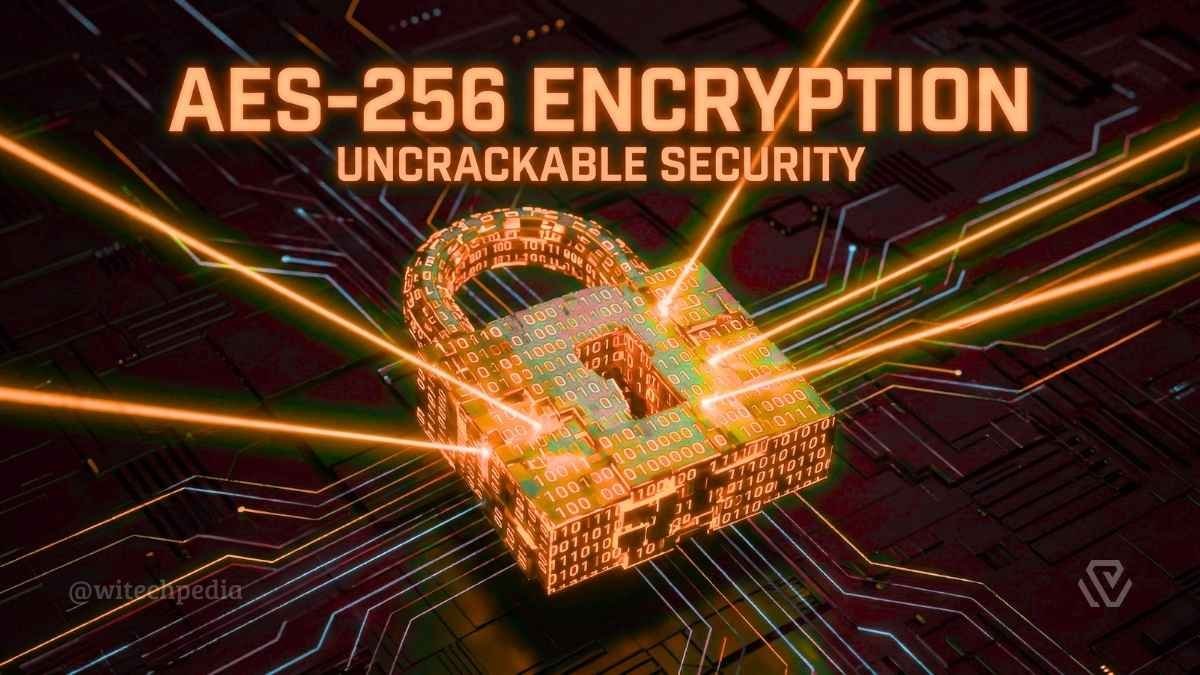
You see the phrase “Military-Grade Encryption” plastered on every VPN website, but is it just marketing hype, or is it real security? The technology behind this claim is AES-256 encryption (Advanced Encryption Standard with a 256-bit key). It is the same standard used by the NSA, banks, and governments worldwide to protect Top Secret data.
In the context of a VPN, AES-256 is the mathematical “lock” that scrambles your data so that even if a hacker intercepts it, they see nothing but gibberish.
What is AES (Advanced Encryption Standard)?
AES was established in 2001 by the National Institute of Standards and Technology (NIST) to replace the aging DES (Data Encryption Standard). It is a symmetric encryption algorithm, meaning the same key is used to both encrypt (lock) and decrypt (unlock) the data.
How Does AES-256 Actually Work?
Imagine you have a message. AES breaks this message into blocks of 128 bits. It then applies a specific “Key” to scramble that block.
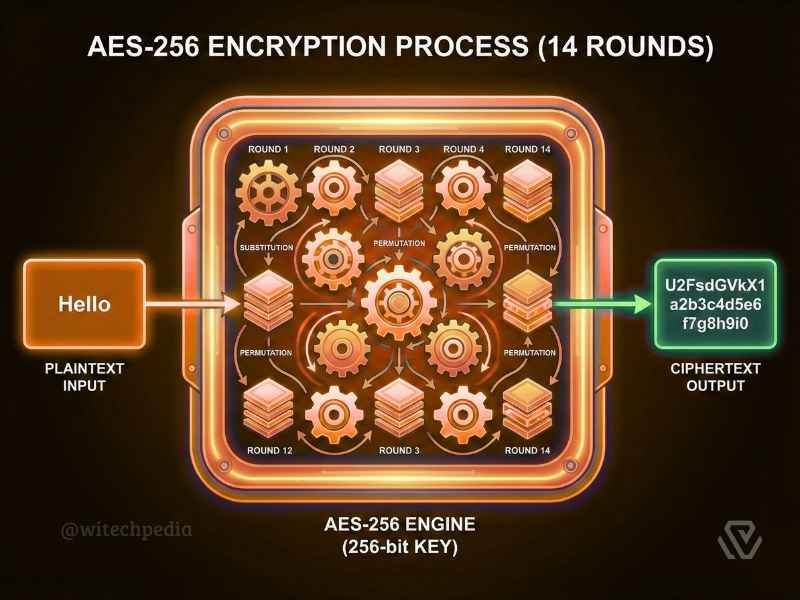
128-bit vs. 256-bit: Does Size Matter?
You might wonder, “Is 256-bit encryption just double the strength of 128-bit?” No—it is exponentially stronger.
- 128-bit key: Has $3.4 \times 10^{38}$ possible combinations.
- 256-bit key: Has $1.1 \times 10^{77}$ possible combinations.
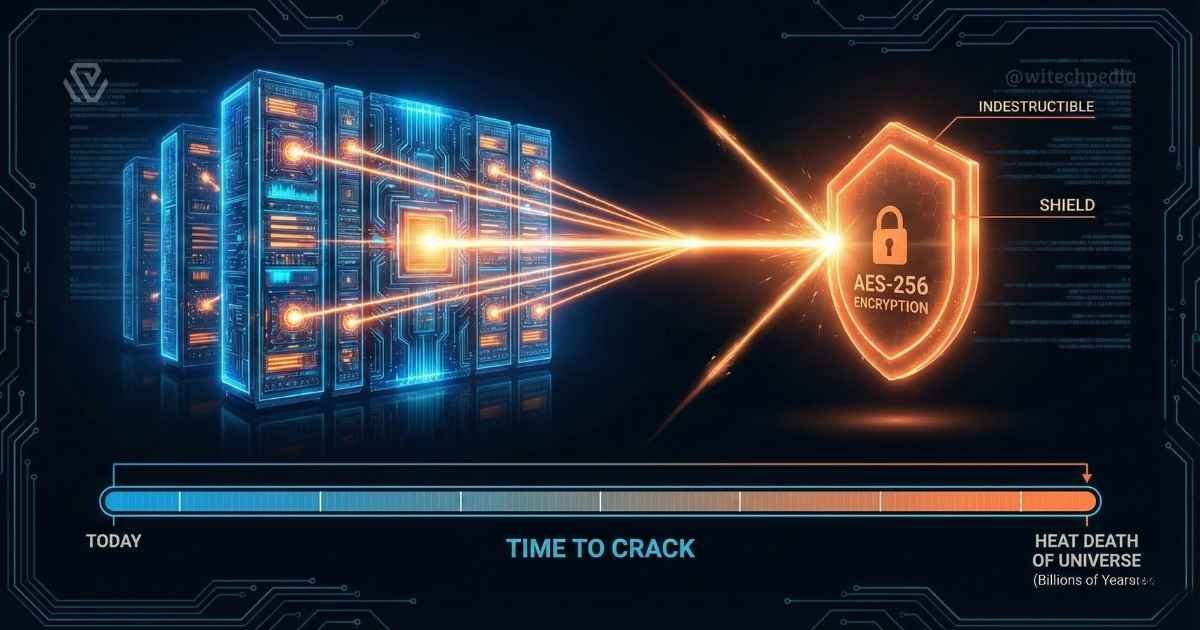
To put this in perspective: If you used the world’s fastest supercomputer to try and guess the key (Brute Force attack), it would take billions of years—longer than the age of the universe—to crack a single AES-256 encryption key.
See how VPN Protocols like OpenVPN utilize this encryption
The “Handshake”: How Keys are Exchanged
If the key locks the data, how do you send the key safely across the internet without a hacker stealing it? This is done through a process called the Handshake (often using RSA or Diffie-Hellman keys).
Modern VPNs also use something called Perfect Forward Secrecy (PFS). This ensures that the encryption key changes for every single session. Even if a hacker manages to steal the key for your current session, they cannot use it to decrypt your past sessions.
Can AES-256 Be Hacked?
Currently, there is no known practical attack that can break AES-256.
- The Quantum Threat: In the future, powerful Quantum Computers might be able to crack it, which is why cryptographers are already working on “Post-Quantum Cryptography.”
- The Real Weakness: The encryption itself is rarely the weak point. The weak point is usually the user (weak passwords, phishing attacks) or the endpoint (malware on your device).
Conclusion
AES-256 encryption is the bedrock of modern digital privacy. It is the reason you can safely check your bank account while sitting in a coffee shop. When a VPN provider offers this standard, they aren’t just using a buzzword—they are using the most secure locking mechanism currently known to man.
- Return to the Ultimate VPN Guide
- Best VPNs that offer AES-256 Security