









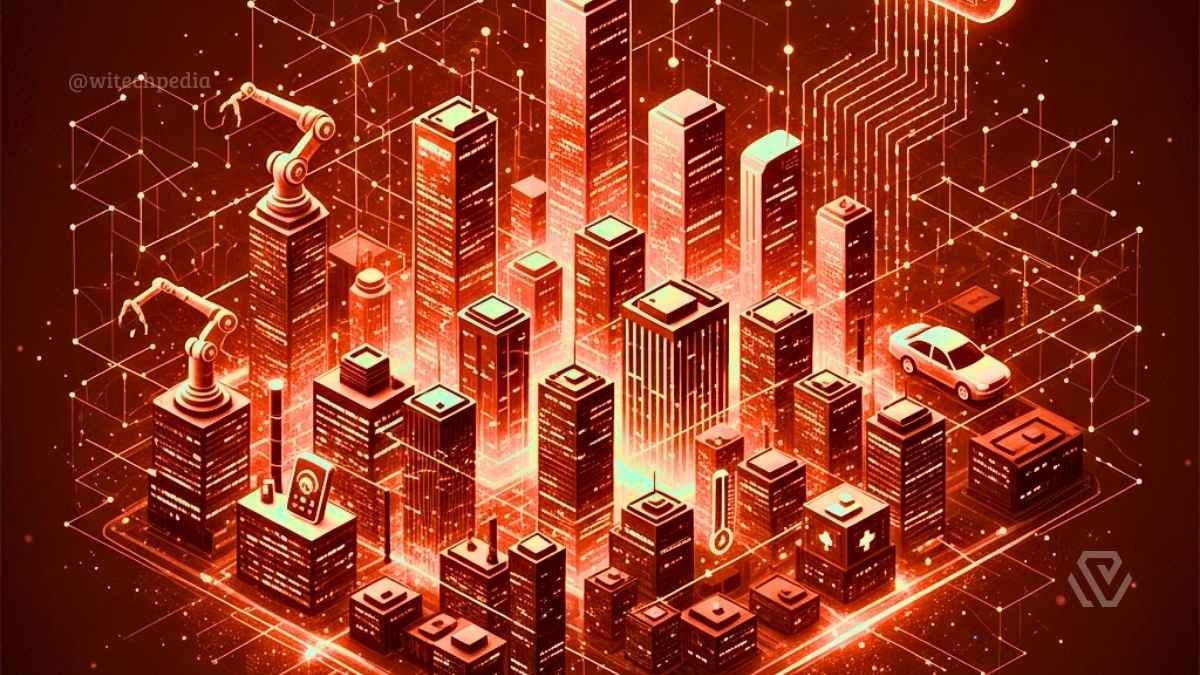
The Internet of Things (IoT) refers to the vast network of physical objects—”things”—embedded with sensors, software, and other technologies for the purpose of connecting and exchanging data with other devices and systems over the internet. As of 2026, the field has evolved beyond simple connectivity into AIoT (Artificial Intelligence of Things), where devices not only communicate but also make autonomous decisions at the edge.
Wiki Quick Facts
- First Coined: 1999 by Kevin Ashton
- Core Architecture: 4-Layer Model (Perception, Network, Processing, Application)
- Primary Protocols: MQTT, CoAP, LoRaWAN, Matter, 5G/6G
- Key Trend 2026: Agentic IoT & Quantum-Safe Encryption
- Global Impact: Smart Cities, Industry 4.0, IoMT
IoT Architecture & Hardware
To understand how IoT works, it is essential to view it through its structural layers. Modern architecture often follows a multi-tier model to ensure scalability and low latency.
The Four-Layer Model
- Perception Layer (Sensing): The “eyes and ears” of the system. This includes sensors (temperature, proximity, RFID) and actuators that interact with the physical world.
- Network Layer (Connectivity): Responsible for transmitting data. This layer utilizes gateways and IoT protocols to move data from the device to the cloud or edge server.
- Processing Layer (Middleware): Where data is stored, filtered, and analyzed. In 2026, much of this happens via Edge Computing to reduce bandwidth costs.
- Application Layer: The user-facing interface, such as smart home apps or industrial dashboards, where data is turned into actionable insights.
Related Hardware:
- Microcontrollers: ESP32, Arduino, and Raspberry Pi.
- Industrial Gateways: High-ruggedness devices for IIoT environments.
Connectivity & Protocols
Connectivity is the backbone of any IoT ecosystem. The choice of protocol depends on range, power consumption, and data throughput.
- Short-Range: Bluetooth Low Energy (BLE) and Zigbee are dominant in wearables and smart homes.
- LPWAN (Long Range, Low Power): LoRaWAN and NB-IoT allow sensors to operate for 10+ years on a single battery, ideal for Smart Agriculture.
- Messaging Protocols: MQTT is the industry standard for lightweight “publish/subscribe” messaging, while CoAP is used for highly constrained devices.
- Modern Standards: The Matter Protocol has revolutionized the Smart Home by allowing cross-brand interoperability.
Industrial IoT (IIoT) & Industry 4.0
The application of IoT in manufacturing is known as Industry 4.0. This involves the use of Digital Twins—virtual replicas of physical assets—to simulate performance and predict failures.
- Predictive Maintenance: Using vibration and heat sensors to fix machinery before it breaks.
- Smart Supply Chain: Real-time tracking of goods using GPS and Cellular IoT.
- Human-Machine Collaboration: Wearables that monitor worker safety in high-risk zones.
IoT Security & 2026 Compliance
As billions of devices go online, the attack surface for cybercriminals expands. IoT security is no longer an “afterthought” but a regulatory requirement.
Key Threats
- Botnets: Unsecured devices (like cameras) being hijacked for DDoS attacks.
- Data Privacy: Compliance with the EU AI Act and GDPR is mandatory for devices collecting biometric or personal data.
Future-Proofing
- Quantum-Safe Cryptography: With the rise of quantum computing, 2026 marks the shift toward Post-Quantum Encryption for infrastructure.
- Blockchain in IoT: Providing a decentralized ledger for device identity and secure firmware updates.
The Future: Agentic AI & 6G
The next frontier for the Internet of Things is the transition from “Connected Things” to “Autonomous Agents.”
- Agentic IoT: Devices that use On-device AI to negotiate with other devices (e.g., a smart grid automatically buying energy from a neighbor’s solar panel).
- 6G Research: While 5G is the current standard, 6G is being designed to support “Integrated Sensing and Communication,” allowing the network itself to act as a sensor.