





As we navigate the cloud trends for data management 2026 landscape, it is clear that cloud computing has officially transitioned from a technical ‘option’ to the non-negotiable backbone of global enterprise.
- 1. AI-Native Infrastructure: Reshaping Cloud Trends for Data Management 2026
- 2. The Shift to “Autonomous FinOps”
- 3. Sovereign Clouds and “Geopatriation”
- 4. Hybrid Data Mesh: Resolving the Architecture Debate
- 5. Zero-Trust and Confidential Computing
- Frequently Asked Questions (FAQ)
- Conclusion: Future-Proofing Your 2026 Strategy
This shift is a core component of the broader digital landscape we explored in our Top 5 Tech Predictions for 2026. According to the latest Gartner Forecasts, global public cloud spending is projected to exceed $830 billion this year, driven by a massive surge in AI-driven infrastructure.
For data leaders, the challenge is no longer just “getting to the cloud,” but managing the complexity of increasingly fragmented, AI-native, and highly regulated environments.
Here are the top cloud trends for data management in 2026 and how you can leverage them for a competitive advantage.
1. AI-Native Infrastructure: Reshaping Cloud Trends for Data Management 2026
In 2025, the focus was on running LLMs in the cloud. In 2026, the cloud itself has become “AI-Native.”

Cloud providers are now offering specialized hardware—like custom AI ASICs—designed specifically for Agentic AI. For developers and architects, building for these environments starts with selecting the Best Languages for AI Development in 2026 to ensure seamless integration.
Unlike standard bots, these autonomous agents require “Context Engineering.” This means data management systems must now deliver fresh, streaming context in milliseconds to support autonomous workflows.
- Strategic Move: Evaluate platforms like Snowflake or Microsoft Fabric, which have embedded AI capabilities directly into their data layers to automate routine cleansing and preparation.
2. The Shift to “Autonomous FinOps”
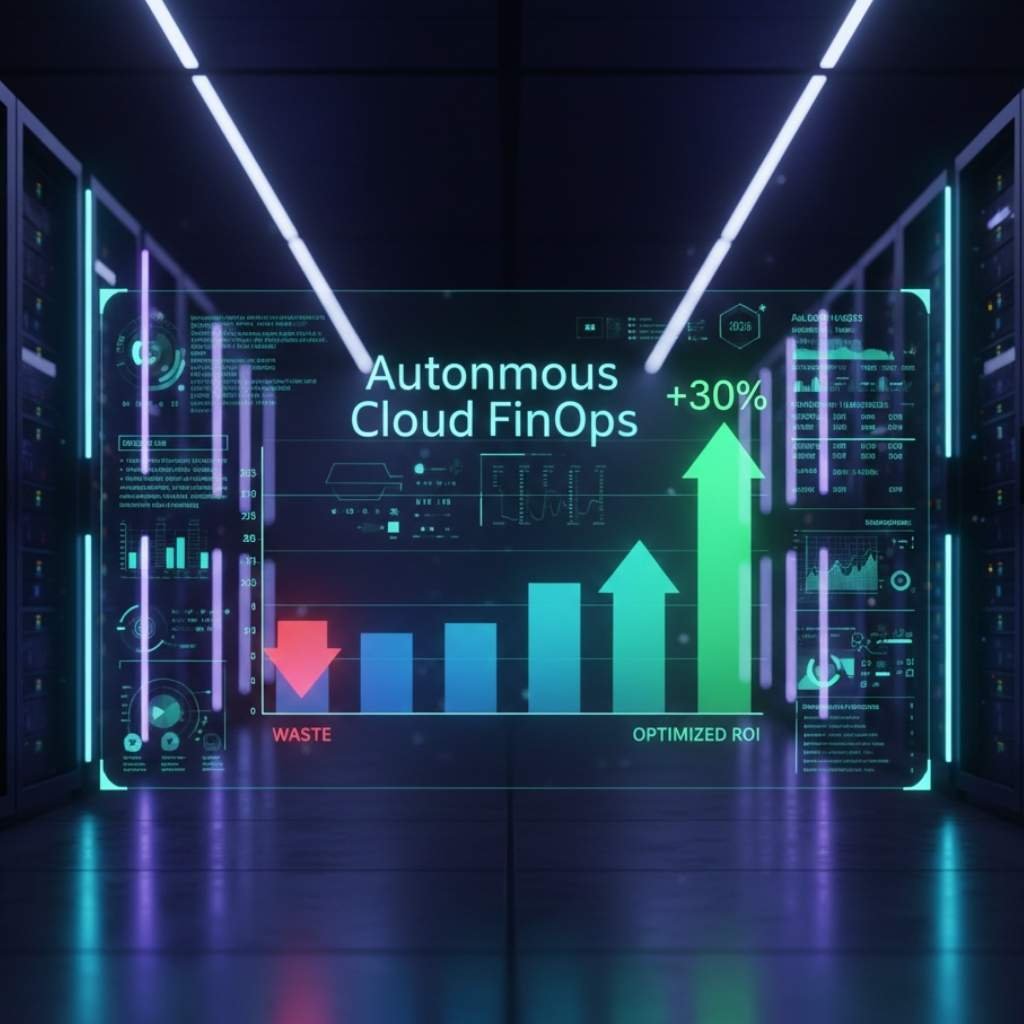
Cloud waste remains a multi-billion dollar problem. Industry reports indicate that nearly 32% of cloud budgets are still wasted due to overprovisioning.
In 2026, manual cost tracking is being replaced by Autonomous FinOps. By adopting the standards set by the FinOps Foundation, organizations are seeing up to a 30% reduction in unallocated waste through real-time, AI-driven resource reallocation.
3. Sovereign Clouds and “Geopatriation”

Geopolitical tensions and strict data laws, such as India’s DPDP Act and Europe’s GDPR, have made data residency a top priority.
The trend of ‘Geopatriation’ ensures that sensitive workloads remain within specific jurisdictions, protecting them from extraterritorial access.
The trend of Geopatriation—moving virtual workloads into regional or sovereign clouds—is accelerating. By 2027, IDC predicts that 75% of large enterprises will rely on sovereign cloud solutions to ensure their data never leaves specific jurisdictions, protecting them from “extraterritorial” data access.
4. Hybrid Data Mesh: Resolving the Architecture Debate
The long-standing debate between Data Mesh and Data Fabric has finally resolved into a hybrid approach.
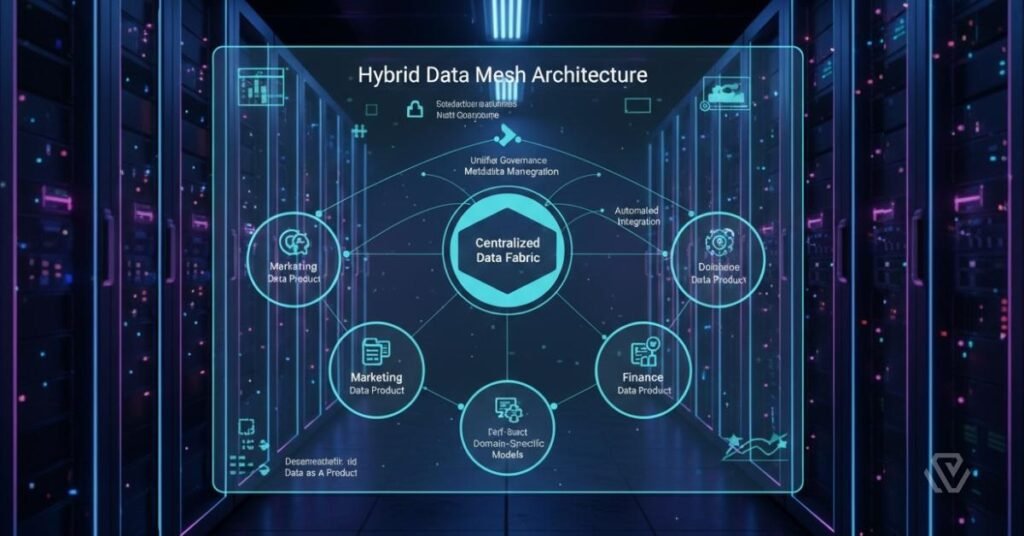

- Data Fabric provides the unified integration and metadata layer.
- Data Mesh empowers decentralized ownership, allowing business units (like Marketing or Finance) to manage their data as “products.”
This “hub-and-spoke” model allows for federated governance, where central IT sets the rules, but local teams have the agility to innovate.
5. Zero-Trust and Confidential Computing
2026 is the year of Confidential Computing, which protects data while it is being processed in memory. These cloud-based security measures work in tandem with Preemptive Cybersecurity in 2026 to create a multi-layered defense against increasingly sophisticated AI-driven threats.
Combined with Zero-Trust Architectures, where no user or device is trusted by default, enterprises are finally able to run sensitive analytics in the public cloud without risking exposure to the cloud provider itself.
Frequently Asked Questions (FAQ)
What is the biggest cloud trend for 2026?
AI-native infrastructure and Agentic AI workflows
How will FinOps change in 2026?
It will transition to Autonomous FinOps, using AI to reduce cloud waste in real-time
Conclusion: Future-Proofing Your 2026 Strategy
The “cloud-everything” era is ending, replaced by a “cloud-smart” era. To succeed in 2026, your data management strategy must be:
- AI-Ready: Capable of feeding autonomous agents with high-velocity context.
- Cost-Disciplined: Powered by automated FinOps to prevent budget bleed.
- Compliant: Anchored in sovereign cloud regions to navigate the regulatory minefield.
For more insights into the evolving digital landscape, stay tuned to WiTechPedia—your source for the latest in cloud transformation.