









In 2019, Google announced it had achieved “quantum supremacy” — solving a problem in 200 seconds that would take the world’s most powerful supercomputer 10,000 years. That single headline changed how the world thinks about the future of computing. But what exactly is quantum computing, and why should anyone care?
Quantum computing isn’t just a faster version of the computers we use today. It’s an entirely different paradigm — one built on the strange, counterintuitive laws of quantum mechanics. Whether you’re a developer, a business leader, a student, or simply someone curious about the future, understanding quantum computing has never been more important.
- What Is Quantum Computing?
- Quantum Computing vs. Classical Computing: A Clear Comparison
- How Does a Quantum Computer Actually Work?
- Real-World Applications of Quantum Computing
- Quantum Supremacy: What It Means and Why It Matters
- Who Are the Major Players in Quantum Computing?
- The Road Ahead: Challenges and the Future of Quantum Computing
- Frequently Asked Questions (FAQ)
- Conclusion: The Quantum Leap Is Already Underway
This guide breaks it all down: the science, the real-world applications, the companies racing to dominate the space, and what it all means for the world ahead.
What Is Quantum Computing?
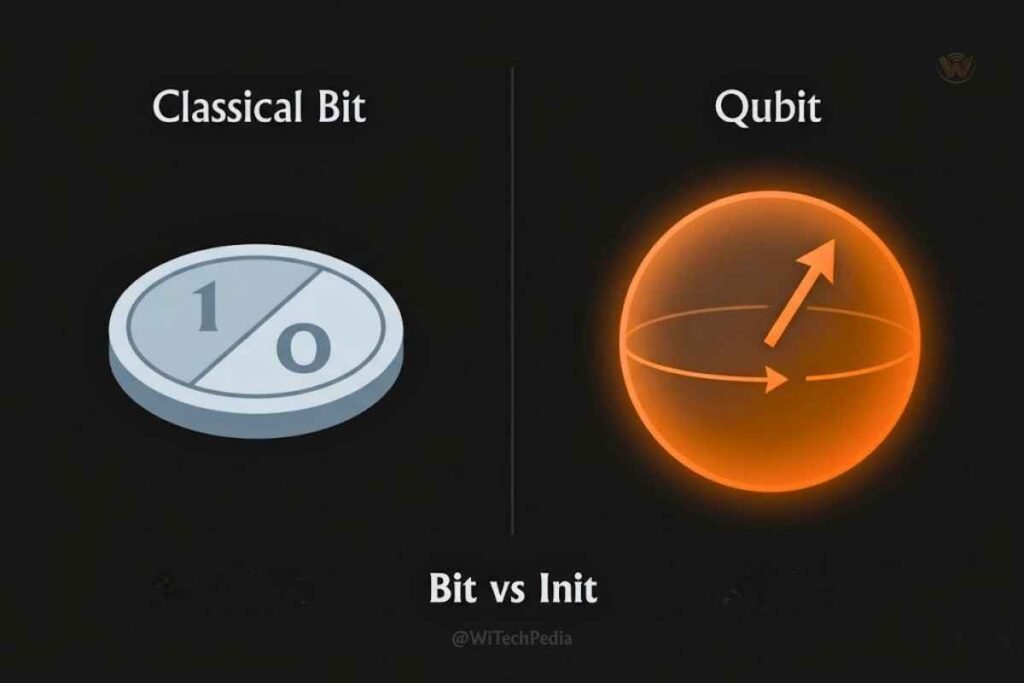
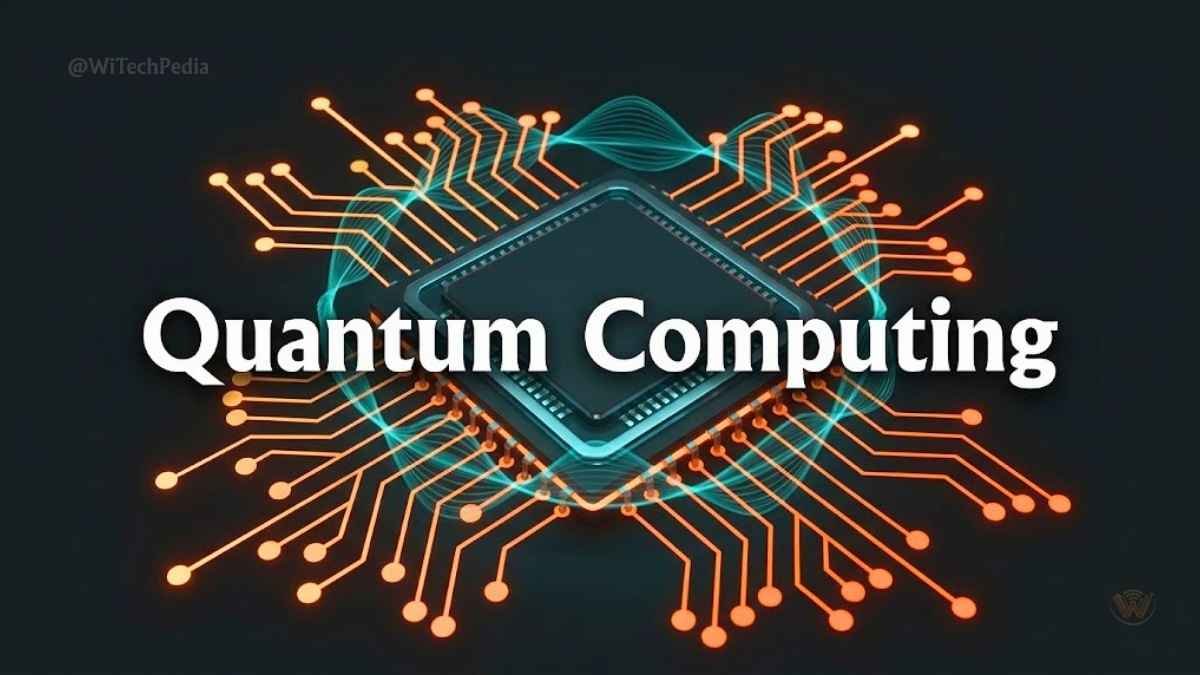
At its core, quantum computing is a type of computation that harnesses quantum mechanical phenomena — such as superposition, entanglement, and interference — to process information in fundamentally new ways.
Classical computers (the laptops, phones, and servers we use daily) store and process data in bits — binary units that are either a 0 or a 1. Quantum computers use qubits (quantum bits), which can exist as 0, 1, or both simultaneously thanks to superposition.
This seemingly small difference creates an exponential leap in processing power for specific types of problems.
The Three Pillars of Quantum Mechanics in Computing
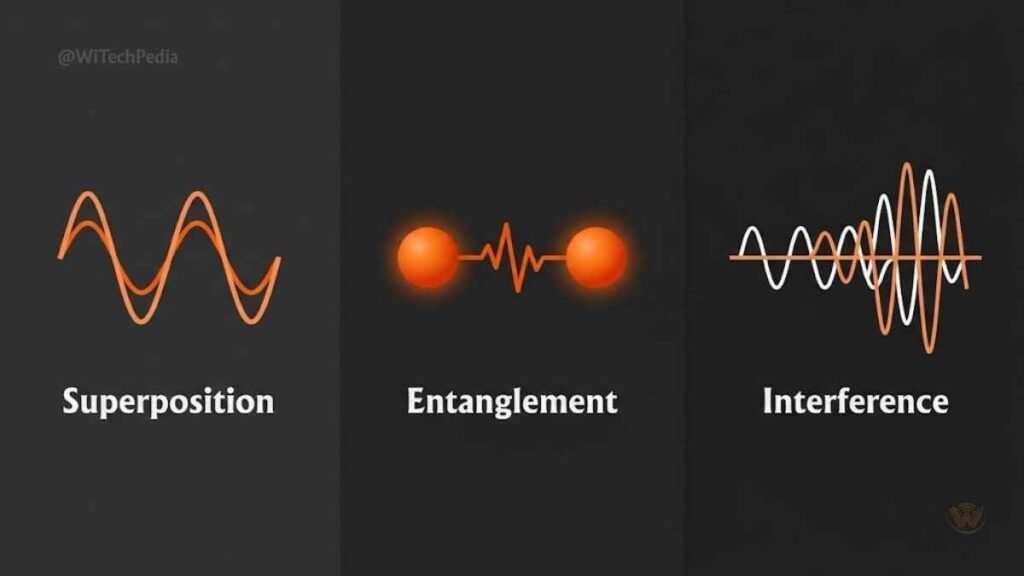
1. Superposition
A qubit doesn’t have to “choose” between 0 and 1 until it is measured. Before measurement, it exists in a superposition of both states. This allows quantum computers to explore many possible solutions to a problem at the same time.
You May Also Like
Think of it this way: a classical computer tries every door in a maze one by one. A quantum computer tries all doors simultaneously.
2. Entanglement
When qubits become entangled, the state of one qubit instantly influences the state of another — regardless of physical distance. Einstein famously called this “spooky action at a distance.” In computing, entanglement allows qubits to coordinate in powerful ways that have no classical equivalent, enabling quantum computers to perform complex multi-variable computations far more efficiently.
3. Interference
Quantum algorithms use interference to amplify computational paths that lead to correct answers and cancel out paths that don’t. This is how quantum computers can zero in on solutions to problems that would otherwise require brute-force enumeration.
Quantum Computing vs. Classical Computing: A Clear Comparison
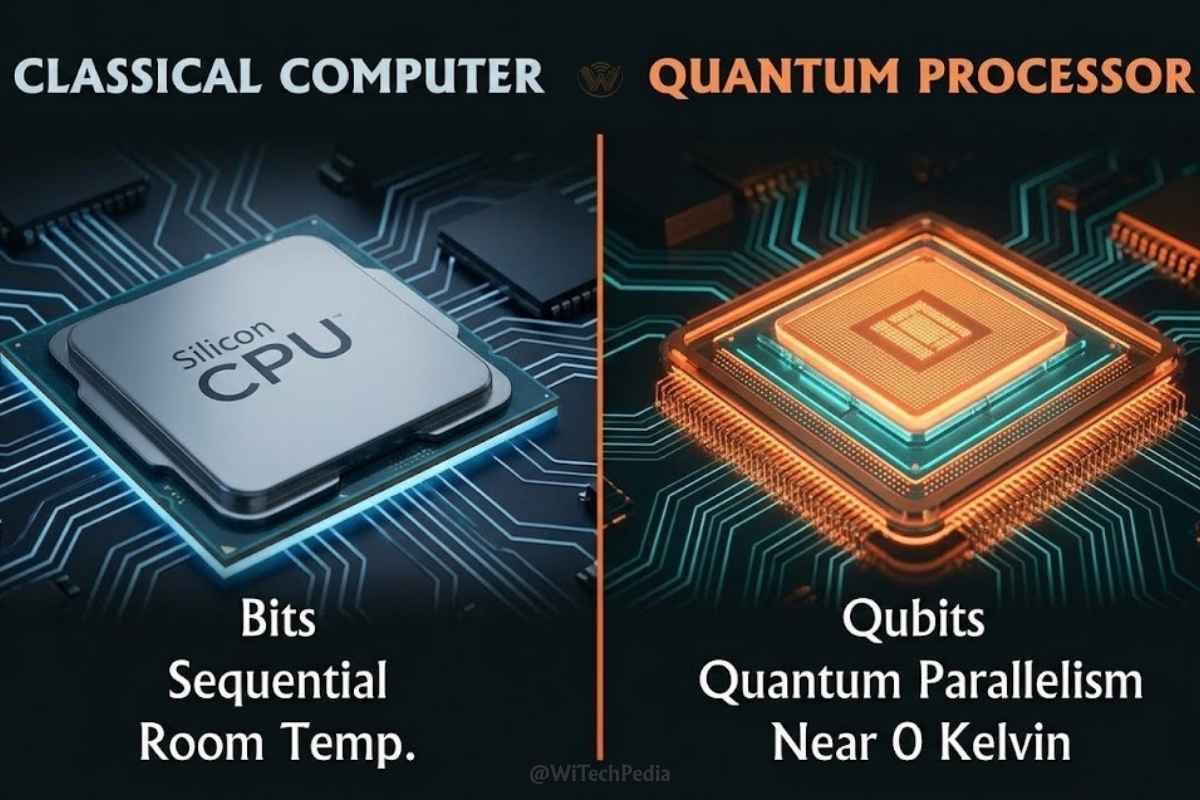
| Feature | Classical Computing | Quantum Computing |
|---|---|---|
| Basic Unit | Bit (0 or 1) | Qubit (0, 1, or both) |
| Processing Style | Sequential / parallel threads | Quantum parallelism |
| Speed Advantage | General tasks | Optimization, simulation, cryptography |
| Error Rate | Very low | Currently high (NISQ era) |
| Best Use Cases | Everyday applications, databases | Drug discovery, logistics, AI training |
| Scalability | Mature, scalable | Rapidly evolving, pre-commercial |
| Operating Temp. | Room temperature | Near absolute zero (~0.015 K) |
| Leading Examples | Intel, AMD CPUs | IBM Eagle, Google Sycamore, IonQ |
How Does a Quantum Computer Actually Work?
Qubits: The Building Block
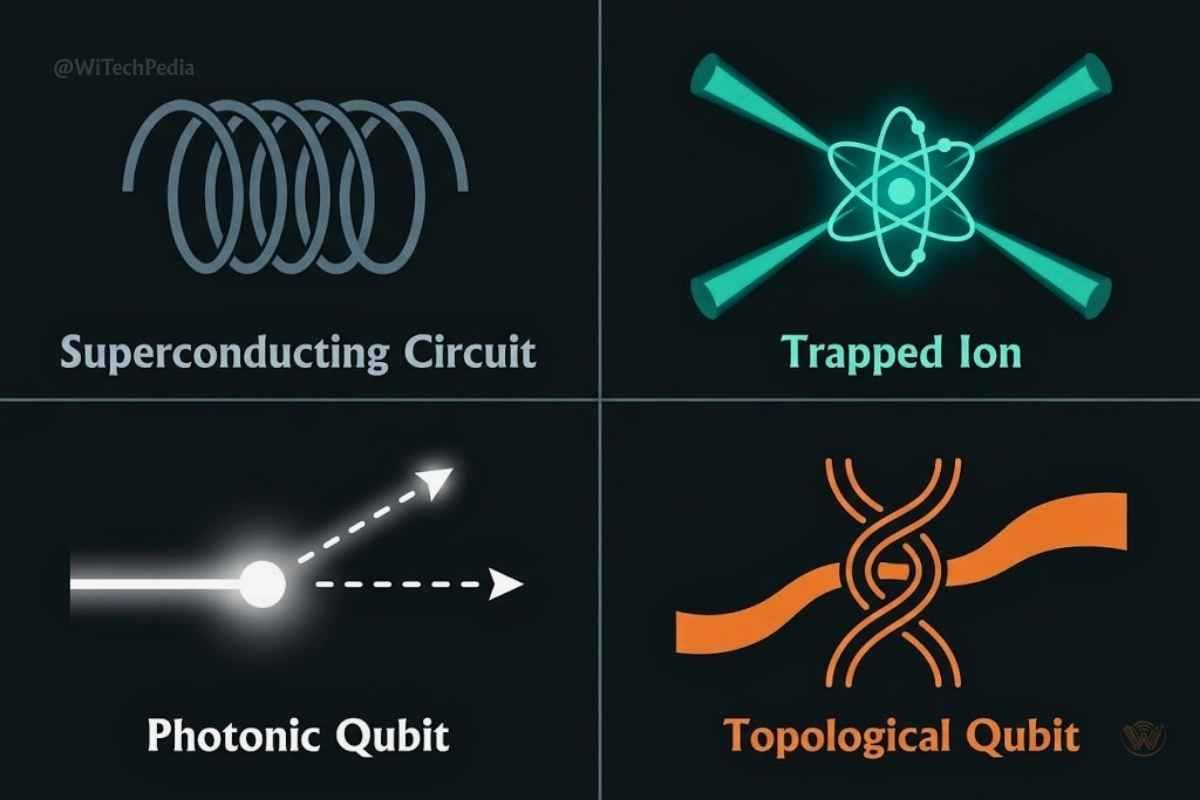
Qubits are physical systems — they can be implemented using:
- Superconducting circuits (used by IBM and Google): Tiny loops of superconducting material cooled to near absolute zero.
- Trapped ions (used by IonQ and Quantinuum): Individual atoms suspended by electromagnetic fields and manipulated by lasers.
- Photonic qubits: Light particles (photons) encoding quantum information.
- Topological qubits (Microsoft’s bet): More stable qubits based on exotic physics — still largely theoretical.
Each approach has trade-offs in stability, scalability, and error rates. No single winner has emerged yet.
Quantum Gates and Circuits
Just as classical computers use logic gates (AND, OR, NOT), quantum computers use quantum gates to manipulate qubits. These gates are reversible and operate on qubits according to the rules of quantum mechanics.
A quantum circuit is a sequence of these gates designed to solve a specific problem — analogous to a classical algorithm.
The Challenge: Decoherence and Error Correction
Qubits are extraordinarily fragile. Interactions with the environment — temperature fluctuations, electromagnetic noise, even cosmic rays — cause decoherence, collapsing a qubit’s quantum state and introducing errors.
This is the defining challenge of modern quantum computing. We currently live in the NISQ era (Noisy Intermediate-Scale Quantum), where quantum processors have 50–1,000 qubits but high error rates. Fault-tolerant quantum computing — where errors are corrected in real time — remains the holy grail.
Real-World Applications of Quantum Computing
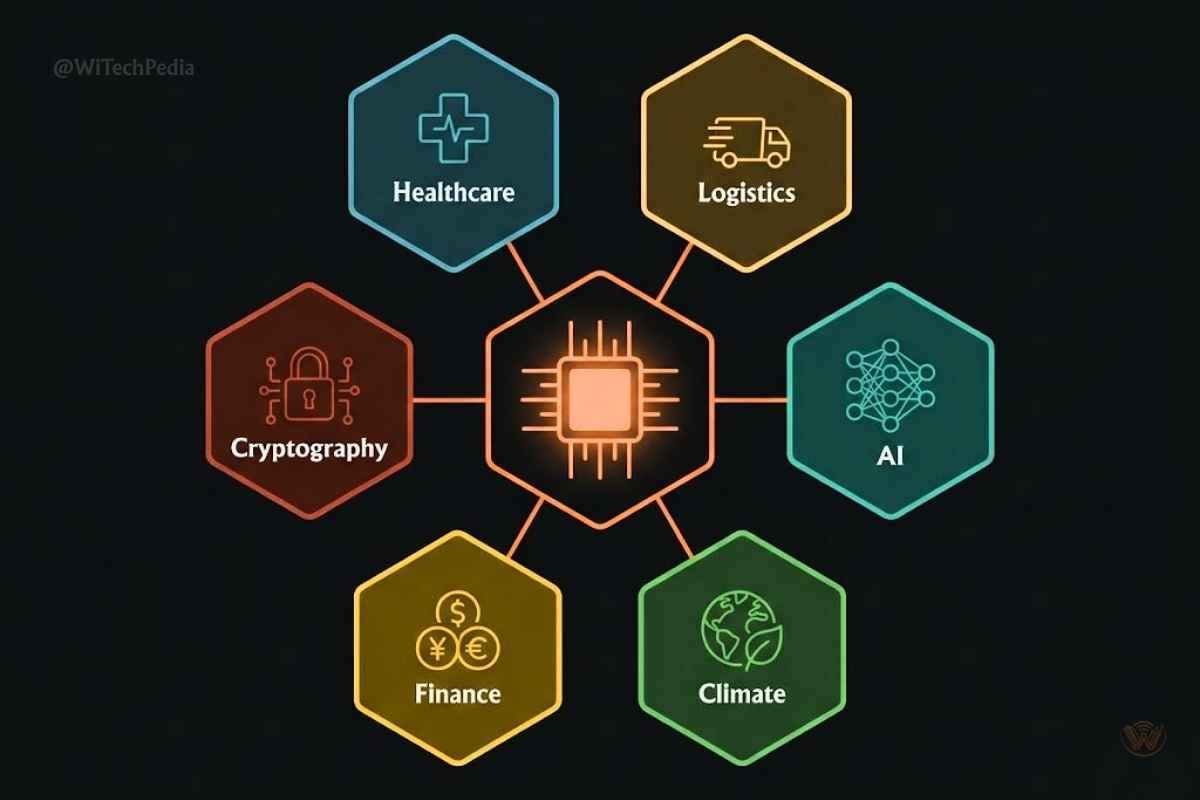
Quantum computing isn’t just theoretical. The race is on to apply it to the world’s most pressing problems.
1. Drug Discovery and Healthcare
Simulating molecular interactions is computationally impossible for classical computers at the quantum level. Quantum computers can model how proteins fold, how drugs interact with receptors, and how disease mechanisms work — dramatically accelerating pharmaceutical research.
- Example: IBM and Cleveland Clinic have partnered to install quantum computers specifically for biomedical research.
2. Cryptography and Cybersecurity
Quantum computers pose an existential threat to current encryption standards. Shor’s algorithm, run on a sufficiently powerful quantum computer, could break RSA encryption in minutes.
This is driving the global push toward post-quantum cryptography (PQC) — encryption algorithms resistant to quantum attacks. In 2024, NIST finalized its first PQC standards, marking a pivotal moment for cybersecurity.
3. Logistics and Supply Chain Optimization
Problems like routing thousands of delivery vehicles, optimizing airline schedules, or managing global supply chains involve combinatorial complexity that stumps classical computers. Quantum algorithms — particularly the Quantum Approximate Optimization Algorithm (QAOA) — are being developed to solve these efficiently.
- Example: Volkswagen and D-Wave have explored quantum optimization for traffic flow in major cities.
4. Financial Modeling
Banks and hedge funds are investing heavily in quantum computing for portfolio optimization, risk analysis, and fraud detection. Monte Carlo simulations that take hours classically could run in seconds.
- Example: JPMorgan Chase has an active quantum computing research team exploring quantum advantage in derivatives pricing.
5. Artificial Intelligence and Machine Learning
Quantum machine learning (QML) promises to accelerate AI model training by performing matrix operations — the backbone of neural networks — exponentially faster. Companies like Google and IBM are exploring how quantum-enhanced algorithms could supercharge the next generation of AI models.
6. Climate Modeling and Materials Science
Simulating the quantum behavior of materials could unlock:
- More efficient solar cells
- Better battery chemistry for electric vehicles
- Room-temperature superconductors
These breakthroughs would have cascading effects on clean energy and the fight against climate change.
Quantum Supremacy: What It Means and Why It Matters
Quantum supremacy (also called quantum advantage) is the milestone at which a quantum computer performs a specific task faster than any classical computer — even in principle.
Google claimed this milestone in 2019 with its Sycamore processor, completing a sampling task in 200 seconds that it estimated would take Summit (then the world’s fastest supercomputer) 10,000 years.
IBM disputed this, arguing their own classical algorithms could do it faster. The debate itself illustrates a key truth: quantum supremacy isn’t a single moment — it’s an ongoing, contested frontier.
Key Milestones in Quantum Computing History
| Year | Milestone |
|---|---|
| 1981 | Richard Feynman proposes quantum computers |
| 1994 | Peter Shor publishes Shor’s factoring algorithm |
| 1996 | Lov Grover publishes Grover’s search algorithm |
| 2001 | IBM demonstrates first 7-qubit NMR quantum computer |
| 2019 | Google claims quantum supremacy (Sycamore, 53 qubits) |
| 2021 | IBM releases 127-qubit Eagle processor |
| 2023 | IBM unveils 1,121-qubit Condor processor |
| 2024 | Google’s Willow chip achieves major error correction breakthrough |
| 2025 | Microsoft claims first logical qubits via topological approach |
Who Are the Major Players in Quantum Computing?
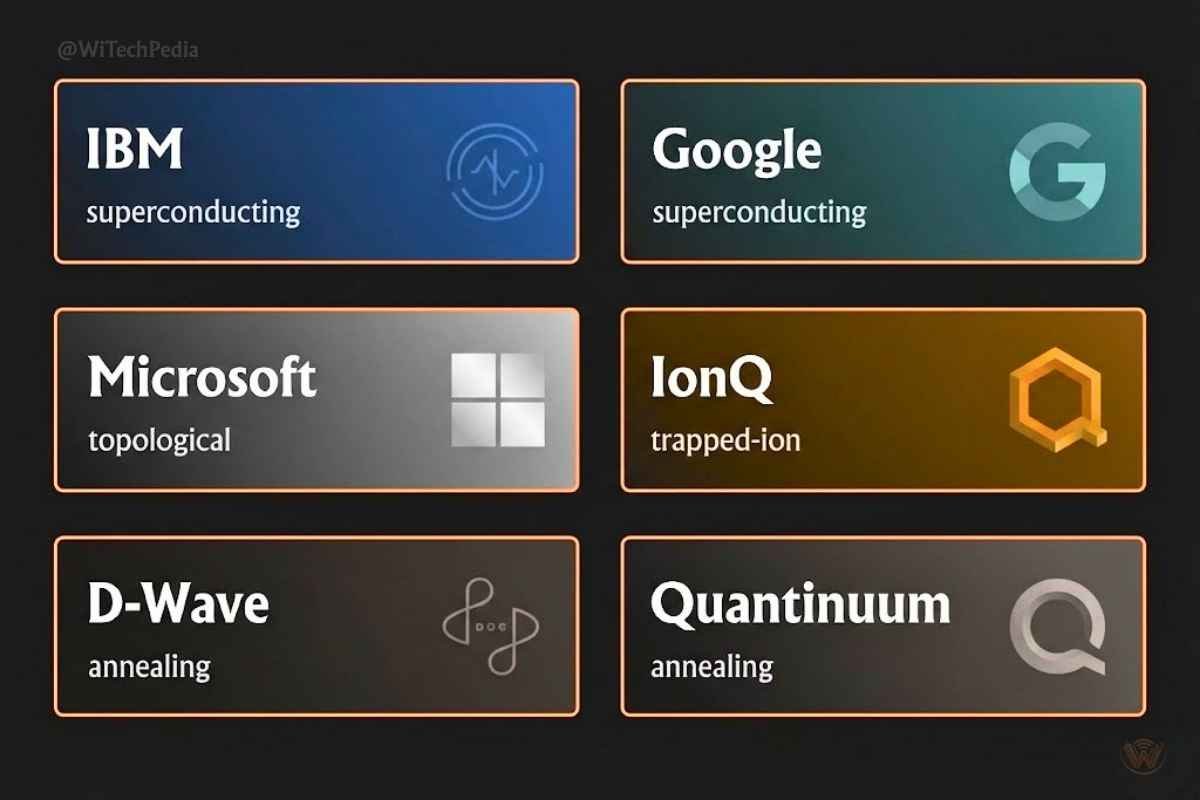
IBM Quantum
IBM has the most mature public quantum platform — IBM Quantum Experience — giving developers cloud access to real quantum hardware. Their roadmap targets fault-tolerant quantum computing by the early 2030s. IBM’s Qiskit is the world’s most widely used open-source quantum SDK.
Google Quantum AI
Google’s Sycamore and Willow processors have made headlines for both quantum supremacy and error correction breakthroughs. They use superconducting qubits and have a strong focus on quantum error correction.
Microsoft Azure Quantum
Microsoft is taking a long-term bet on topological qubits, which promise inherently lower error rates. They also offer a broad quantum cloud platform integrating IonQ, Quantinuum, and their own hardware.
IonQ
IonQ uses trapped-ion technology, which offers high qubit fidelity and longer coherence times. They’re publicly traded and available via AWS, Azure, and Google Cloud.
D-Wave
D-Wave specializes in quantum annealing — a different approach optimized for optimization problems rather than universal quantum computing. They’re one of the longest-running commercial quantum companies.
Quantinuum
A joint venture of Honeywell and Cambridge Quantum, Quantinuum focuses on enterprise quantum applications and claims some of the highest-fidelity trapped-ion systems available.
The Road Ahead: Challenges and the Future of Quantum Computing
Current Limitations
- Qubit instability: Maintaining quantum coherence remains extremely difficult.
- Error rates: Current NISQ-era machines are too error-prone for most commercial applications.
- Scalability: Building thousands of high-quality qubits in a single system remains unsolved.
- Cryogenic requirements: Superconducting qubits require near-absolute-zero cooling, making large-scale deployment costly.
- Talent gap: There are far fewer quantum engineers and physicists than the industry needs.
What the Next Decade Looks Like
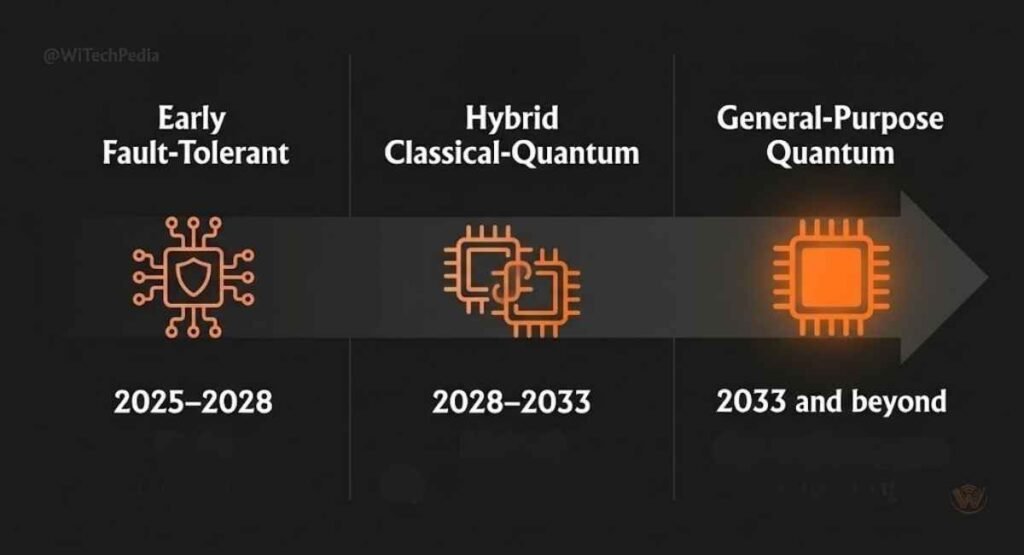
Most experts agree on a rough timeline:
- 2025–2028: Early fault-tolerant systems emerge; limited but real quantum advantage in specific domains (chemistry simulation, optimization).
- 2028–2033: Hybrid classical-quantum workflows become standard in pharma, finance, and logistics.
- 2033+: Fault-tolerant, general-purpose quantum computers begin displacing classical HPC for key workloads.
The National Quantum Initiative Act (US), the EU Quantum Flagship, and China’s massive quantum investments signal that this is a geopolitical race, not just a technological one.
Frequently Asked Questions (FAQ)
What is quantum computing in simple terms?
Quantum computing is a type of computer that uses the principles of quantum physics — particularly superposition and entanglement — to process information in ways classical computers cannot. Instead of bits (0s and 1s), it uses qubits that can represent 0 and 1 simultaneously, enabling it to solve certain complex problems exponentially faster.
How is quantum computing different from classical computing?
Classical computers process data sequentially using bits, while quantum computers use qubits that leverage quantum mechanical effects to explore many computational paths at once. This doesn’t make quantum computers universally faster — they excel at specific problem types like optimization, simulation, and cryptography where classical machines hit hard limits.
Will quantum computers replace classical computers?
No — at least not entirely. Quantum computers are not better at everyday tasks like browsing the web, running office applications, or streaming video. They are specialized tools for specific computationally hard problems. The future likely involves hybrid systems where quantum processors handle select workloads alongside classical infrastructure.
Is quantum computing a threat to encryption?
Yes, in the long term. Shor’s algorithm running on a sufficiently powerful quantum computer could break widely used RSA and ECC encryption. This is why global standards bodies like NIST are actively finalizing post-quantum cryptography (PQC) standards to future-proof digital security. Businesses should begin planning their quantum-safe migration now.
When will quantum computing be commercially viable?
Limited quantum advantage in specific domains (drug discovery, financial modeling, logistics) is expected between 2025 and 2030. General-purpose, fault-tolerant quantum computing — capable of replacing classical computers for broad workloads — is likely a decade or more away. Companies like IBM, Google, and Microsoft all target the early 2030s for transformative milestones.
What programming languages are used for quantum computing?
The most popular quantum programming frameworks include:
- Qiskit (IBM, Python-based) — most widely used
- Cirq (Google, Python-based)
- Q# (Microsoft, purpose-built quantum language)
- PennyLane (Xanadu, focused on quantum machine learning)
- Braket SDK (Amazon, multi-hardware access)
Conclusion: The Quantum Leap Is Already Underway
Quantum computing is no longer science fiction. It is an active, rapidly evolving field with real hardware, real algorithms, and real implications for industries ranging from medicine to finance to national security.
Key Takeaways
- Quantum computers use qubits, which exploit superposition and entanglement to perform certain computations exponentially faster than classical machines.
- We are in the NISQ era — quantum hardware exists but remains error-prone; fault-tolerant systems are the next major frontier.
- Real applications are emerging now in drug discovery, cryptography, logistics optimization, and AI acceleration.
- Quantum supremacy has been claimed (Google, 2019) and debated — it’s a milestone, not a destination.
- Post-quantum cryptography is urgent — organizations must begin planning quantum-safe security strategies today.
The companies and governments that invest in quantum literacy and quantum infrastructure now will define the technological order of the next century.
Want to stay ahead of the quantum curve? Subscribe to the WiTechPedia Newsletter for weekly deep-dives into the technologies reshaping the world — delivered straight to your inbox.