









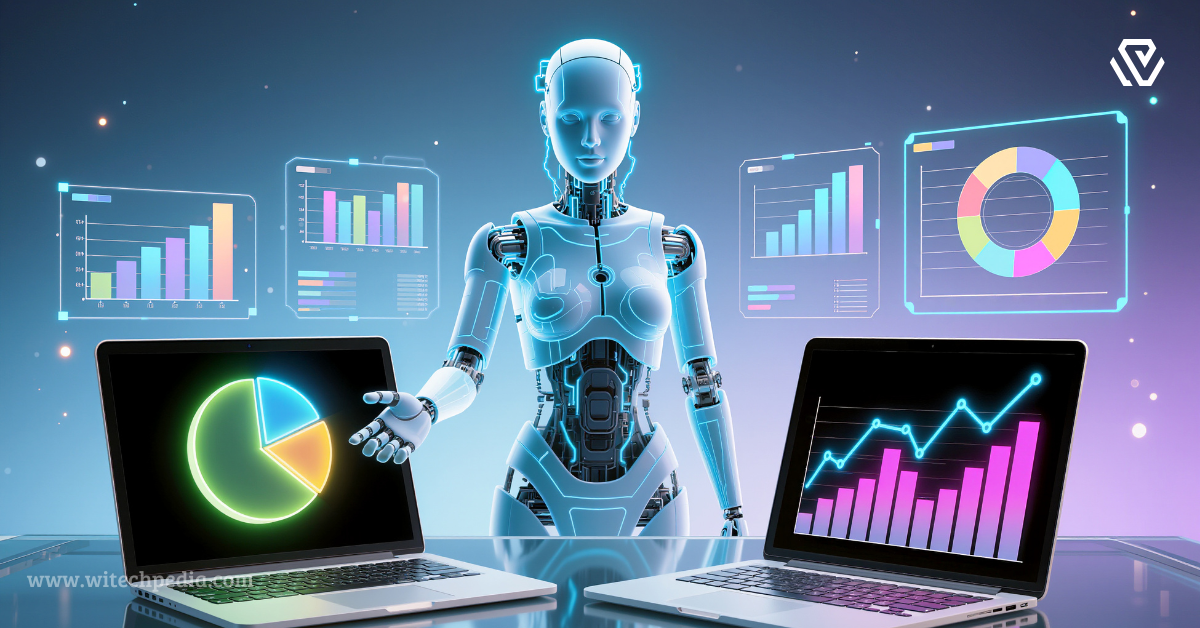
Agentic AI is a growing part of artificial intelligence. It refers to smart systems that can think, plan, and act on their own to reach goals. Unlike basic AI that just answers questions, Agentic AI works like a helpful assistant that makes decisions without always needing human input.
In simple words, Agentic AI uses tools like data analysis and learning to handle tasks. It can adapt to new situations and work step by step. By 2026, many companies are using it to make work faster and smarter, like in business or healthcare.
This technology is important because it saves time and reduces errors. For example, in sales, AI agents can talk to customers and close deals. This article covers what Agentic AI is, its history, examples, challenges, and what’s next.
Definition and Concepts of Agentic AI
Agentic AI means AI that acts independently to complete objectives. It can reason, plan, and take actions with little help from people. These systems learn from data and experiences to get better over time.
Key Components
- Reasoning: The AI thinks about problems and makes plans.
- Autonomy: It decides and acts without constant orders.
- Learning: It improves by remembering past results.
- Tools Integration: Uses other software or data sources to help.
Differences from Traditional AI
Traditional AI follows fixed rules, like a calculator. Agentic AI is more flexible and goal-oriented.
Here’s a simple comparison table:
| Aspect | Agentic AI | Traditional AI |
|---|---|---|
| Behavior | Autonomous, plans and acts | Reactive, follows instructions |
| Key Features | Decision-making, learning from experience | Rule-based, limited adaptation |
| Examples | AI sales agents | Simple chatbots |
Agentic AI examples include systems that manage tasks in business.
(Suggested Image Placement: Next to the table. Image Title: Components of Agentic AI Alt: Diagram of Agentic AI components Description: A flowchart illustrating reasoning, autonomy, learning, and tools in an AI agent. Size: Medium)
History and Evolution
Agentic AI has roots in early AI research but became popular recently.
- 1950s-1980s: Basic ideas of AI agents in computer science, like software that acts in environments.
- 2010s: Rise of machine learning, leading to smarter assistants like Siri.
- 2020s: Big growth with large language models. By 2024-2025, terms like “agentic” emerged from companies like OpenAI.
- 2026: Widespread use in enterprises, with 80% of apps embedding agents.
The evolution involves AI agents becoming more autonomous.
Applications
Agentic AI is used in many fields. Here are some real-life examples:
Business and Sales
AI agents handle customer talks, schedule meetings, and boost sales. For instance, in revenue teams, they scale operations smarter.
Healthcare
Agents analyze patient data and suggest treatments, helping doctors.
Manufacturing and Logistics
They manage supply chains, reroute shipments in real time.
- In finance: Detect fraud autonomously.
- In cybersecurity: Respond to threats quickly.
These show how Agentic AI in business drives efficiency.
Challenges and Limitations
Agentic AI has some hurdles:
- Safety and Ethics: AI might make wrong decisions, raising responsibility issues.
- Integration: Hard to connect with existing systems.
- Data Privacy: Handles sensitive info, so security is key.
- High Costs: Building and training agents can be expensive.
Addressing these is important for safe use.
Future Directions and Trends
In 2026 and beyond, Agentic AI will expand. Predictions include managing full operations in industries. Trends like human-AI teamwork and multi-agent systems will grow.
By 2026, adoption rates could hit high ROI in businesses. The future might see AI as digital coworkers.