










The year is 2026, and the digital landscape has shifted. Traditional software development, once defined by long manual coding cycles, has reached a tipping point. As enterprises face unprecedented pressure to innovate, low-code programming has emerged as the definitive solution for high-velocity delivery.
💡 Key Takeaways: Low-Code Programming in 2026
Speed & Efficiency: Low-code programming reduces development cycles by 5-10x, allowing enterprises to launch apps in days rather than months.
The AI Shift: Generative AI has transformed platforms from “drag-and-drop” to “describe-and-deploy,” using natural language to generate complex UI and logic.
Will It Replace Developers? No. The role of the developer is shifting from manual coding to architecture, security governance, and component building.
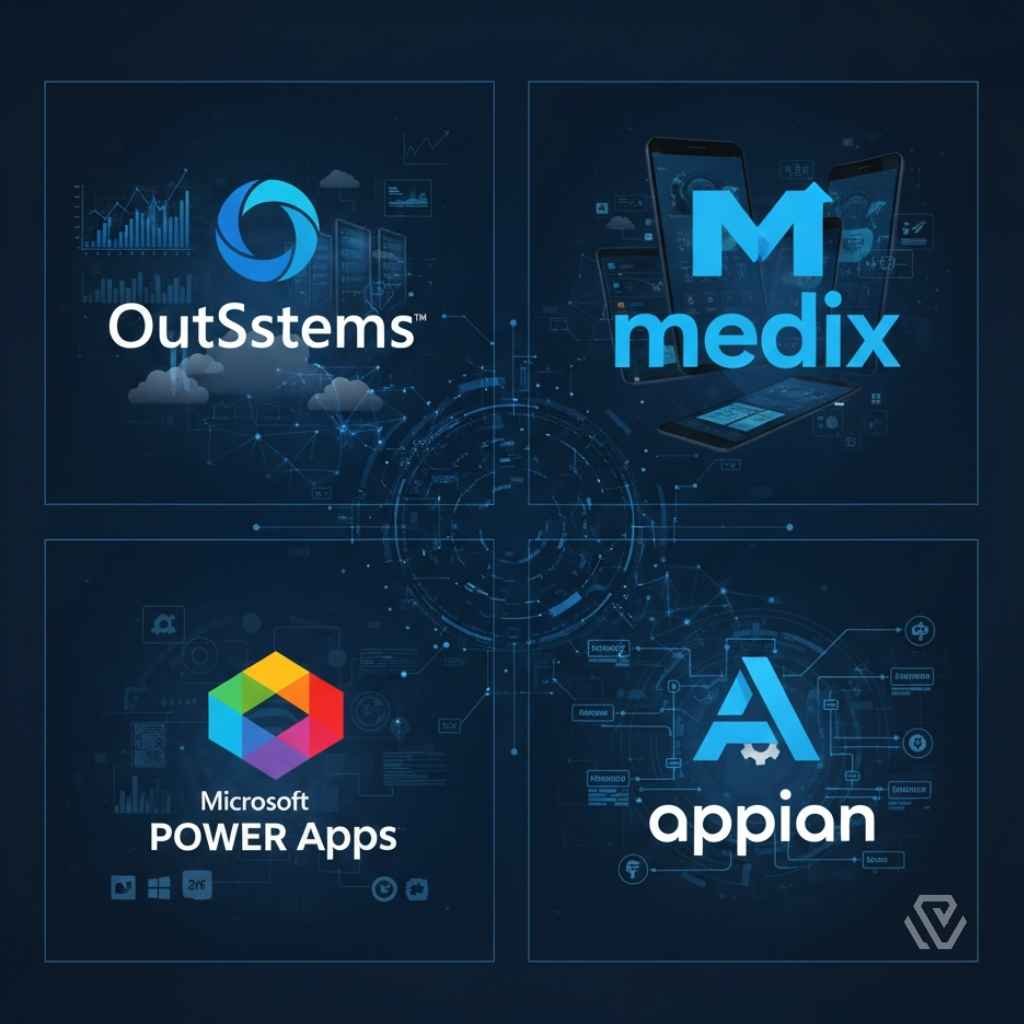
Top Platforms: Market leaders like OutSystems, Microsoft Power Apps, and Mendix are now integrating deep AI capabilities for enterprise-grade scalability.
Strategic Value: Success in 2026 relies on establishing a Center of Excellence (CoE) to manage citizen developers and prevent “Shadow IT.”
Low-Code vs. No-Code vs. Pro-Code: Understanding the Nuances in 2026
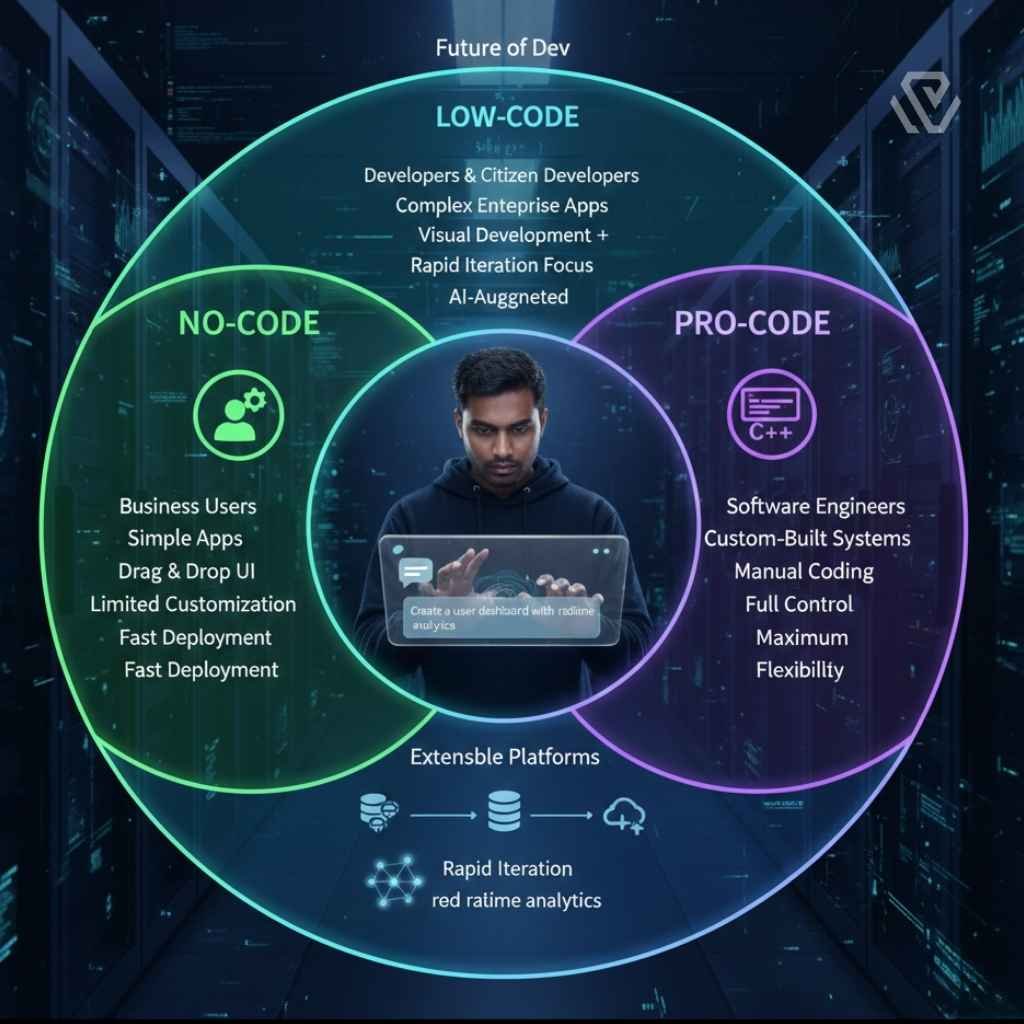
To navigate this landscape, one must understand the nuances between development tiers. Google rewards content that provides clear definitions for users searching for low-code vs traditional coding 2026.
- No-Code: Purely visual, drag-and-drop tools for business users, formally known as Citizen Developers, who create apps without formal coding training.
- Low-Code: A hybrid approach allowing for visual modeling with the ability to inject custom scripts (JavaScript, Python).
- Pro-Code: Traditional manual coding, reserved for high-performance cores and proprietary algorithms.
Check out for good:
The Tech Behind the Low-Code Revolution: AI-Augmented Development
The secret sauce of 2026 is AI-driven low-code tools. In a world where Generative AI and Multimodal models are the standard, low-code platforms have integrated these capabilities to move from “drag-and-drop” to “speak-and-generate.”
- Natural Language to Code: Using LLMs to turn plain English descriptions into functional UI components.
- Automated QA: AI agents that predict bottlenecks and self-heal code to prevent vulnerabilities, similar to the strategies discussed in our guide on AI cybersecurity threats and defenses.
Top Low-Code Programming Platforms to Watch in 2026
Choosing the right platform is critical for enterprise agility. Here are the market leaders:
| Platform | Best For… | Key Feature |
| OutSystems | Enterprise Scalability | High-performance full-stack capability. |
| Mendix | Multi-experience Apps | Seamless AR/Mobile/Web integration. |
| Power Apps | Microsoft Ecosystem | Native integration with Azure and O365. |
| Appian | Process Automation | Advanced BPM and Case Management. |
The Developer Paradox: Will Low-Code Replace Us?
A common search query in 2026 is: “Will low-code replace developers?” The answer is no, but it is changing the job description. We are moving from being “writers” to “architects.” Much like how Physical AI is changing robotics, low-code is changing the “mechanics” of software.

Developers now focus on citizen developer governance, ensuring that while business users build the “what,” IT experts secure the “how.”
Implementation Strategy: Transitioning Effectively
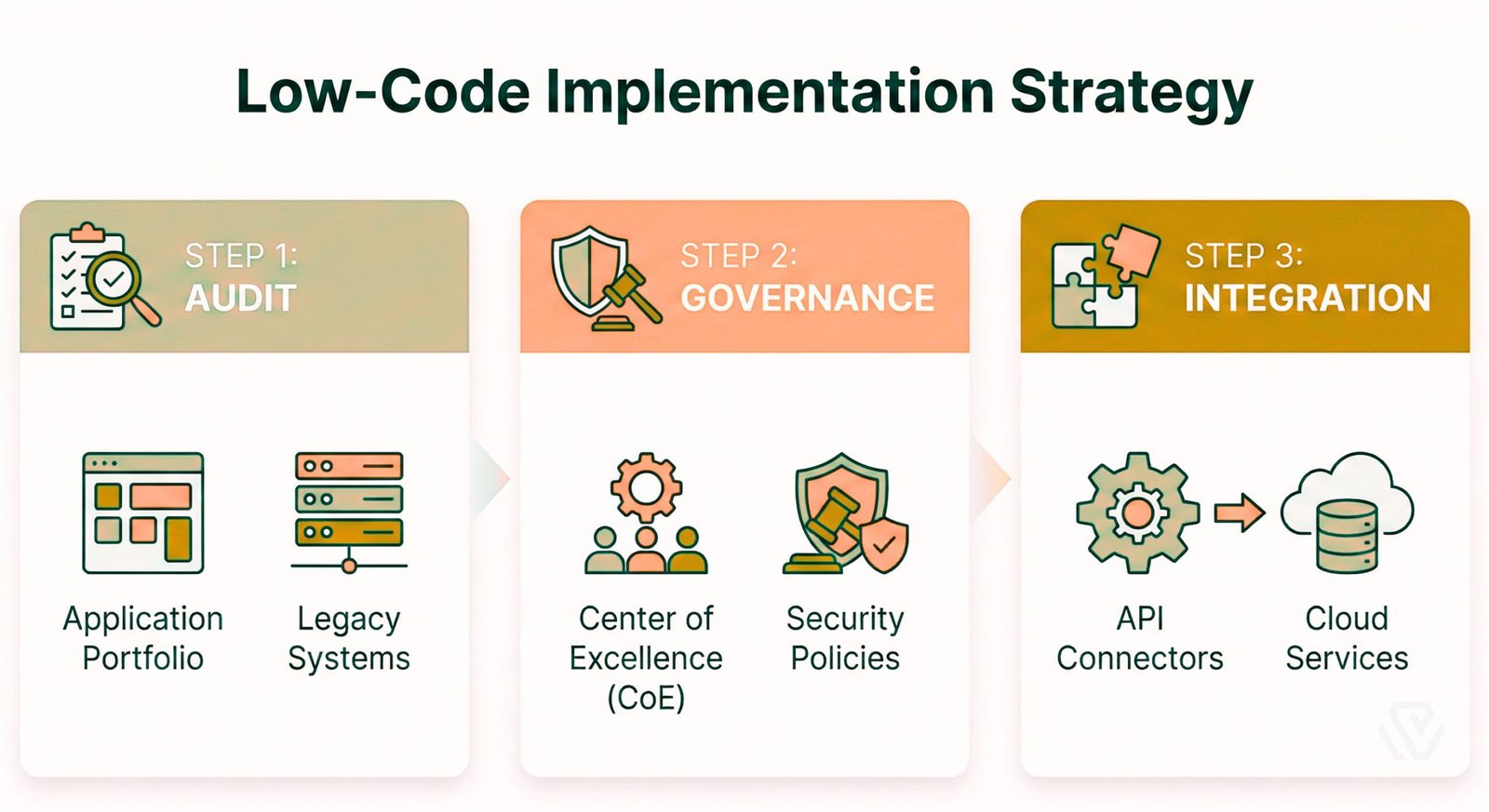
To succeed, follow this 3-step blueprint:
- Audit: Identify legacy systems ready for a low-code facelift.
- Governance: Establish a Center of Excellence (CoE) to avoid “Shadow IT.”
- Integration: Use API connectors to link your visual front-end to robust cloud databases.
Faqs
What is the main advantage of low-code in 2026?
The main advantage is significantly accelerated application development, often reducing development time by 5-10x compared to traditional coding, a shift that Forrester predicts will drive the market to nearly $65 billion by 2027. This speed is driven by visual development, reusable components, and AI-assisted capabilities, enabling enterprises to respond to market demands much faster.
Can low-code handle complex enterprise security requirements?
Yes, modern enterprise low-code platforms are built with robust security frameworks. They offer features like role-based access control (RBAC), data encryption, integration with identity providers (SSO, LDAP), and compliance with industry standards (GDPR, HIPAA). Professional developers can also inject custom security logic where needed.
Is low-code cheaper than hiring a full-stack team?
While the platform itself has licensing costs, low-code can be significantly more cost-effective in the long run. It reduces development time, requires fewer specialized developers per project, and lowers maintenance overhead. The ability for business users to contribute also expands development capacity without proportionate increases in headcount.
Will AI fully automate low-code development?
While AI significantly augments low-code development through natural language processing, predictive design, and automated testing, it won’t fully automate it in 2026. Human oversight, architectural design, complex problem-solving, and creative decision-making by professional developers remain critical. AI is a powerful co-pilot, not a replacement.