








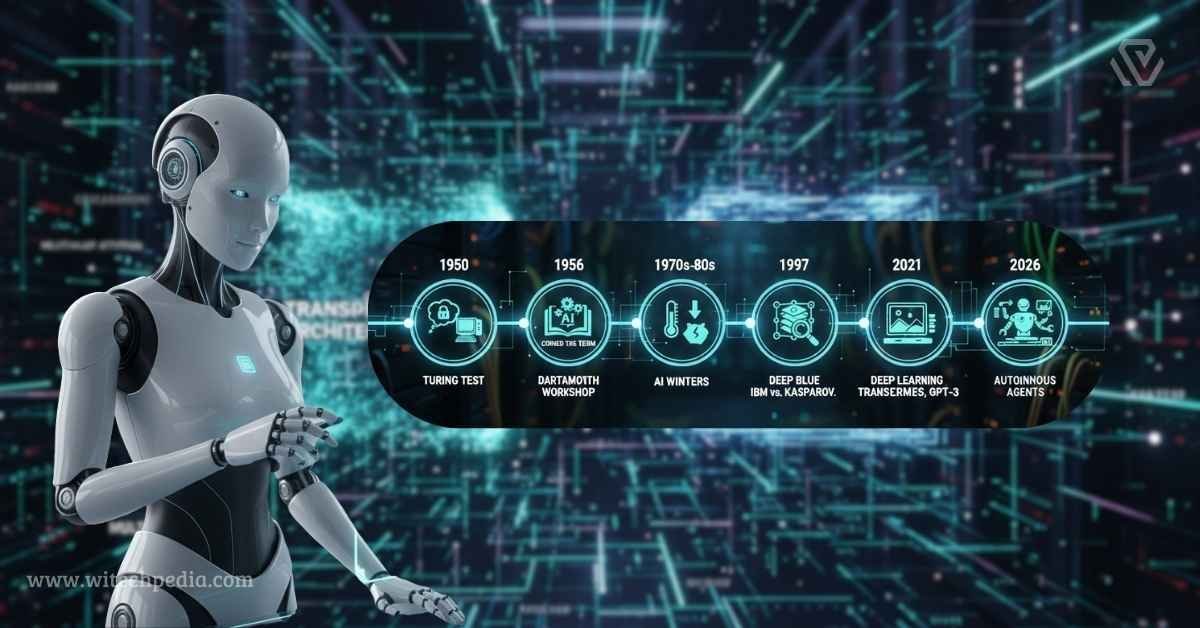
Artificial Intelligence (AI) is no longer a futuristic concept found in the pages of Isaac Asimov’s novels; it is the engine driving the global economy in 2026. From the first lines of code meant to mimic human thought to today’s autonomous Agentic AI, the journey has been a rollercoaster of breakthroughs and “winters.”
- The Dawn of Machine Intelligence (1950–1956)
- The Rollercoaster Era: Golden Years and AI Winters
- The Data Explosion & The Rise of Machine Learning (1990–2010)
- The Deep Learning Revolution (2011–2020)
- The Era of Generative AI and Transformers (2021–2025)
- 2026 and Beyond: The Realities of Agentic AI
- FAQ: The Evolution of AI
To understand where we are headed, we must look back at the milestones that transformed a theoretical concept into the most powerful tool in human history.
The Dawn of Machine Intelligence (1950–1956)
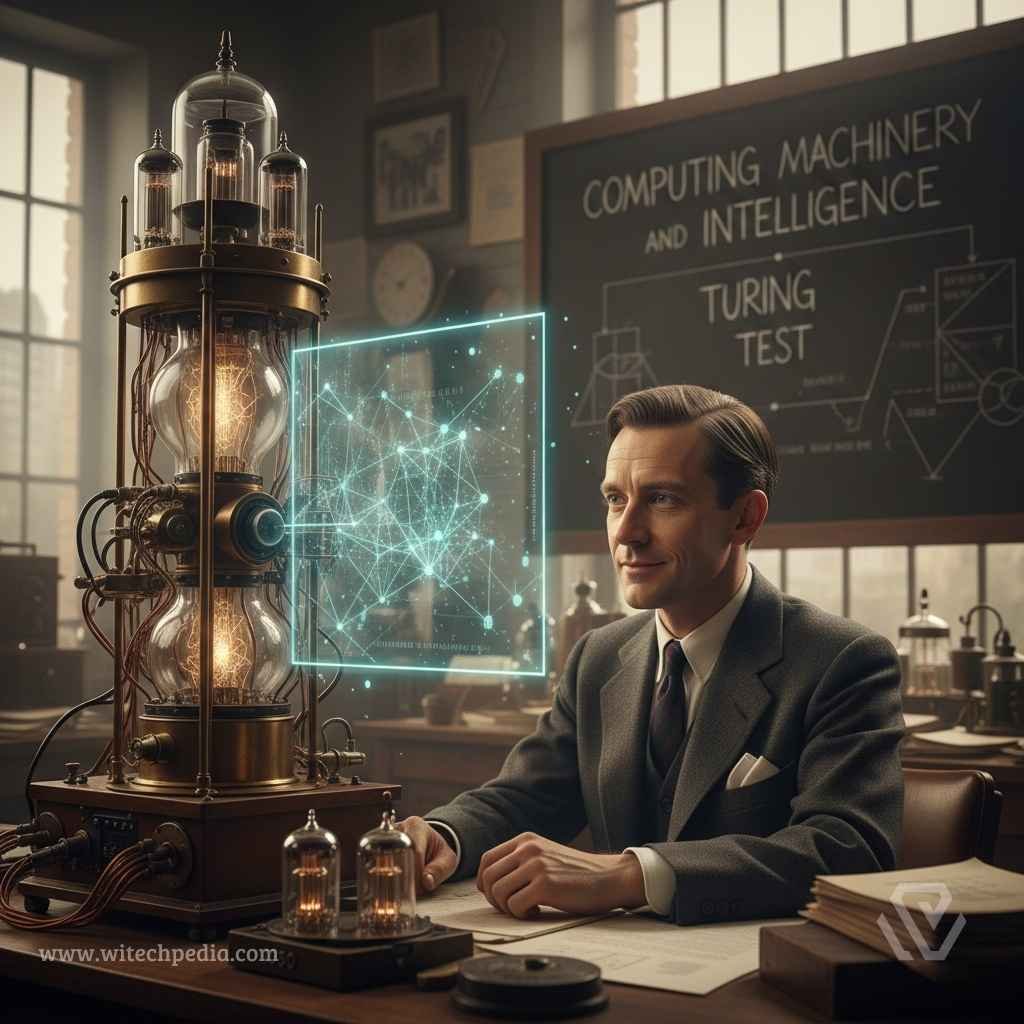
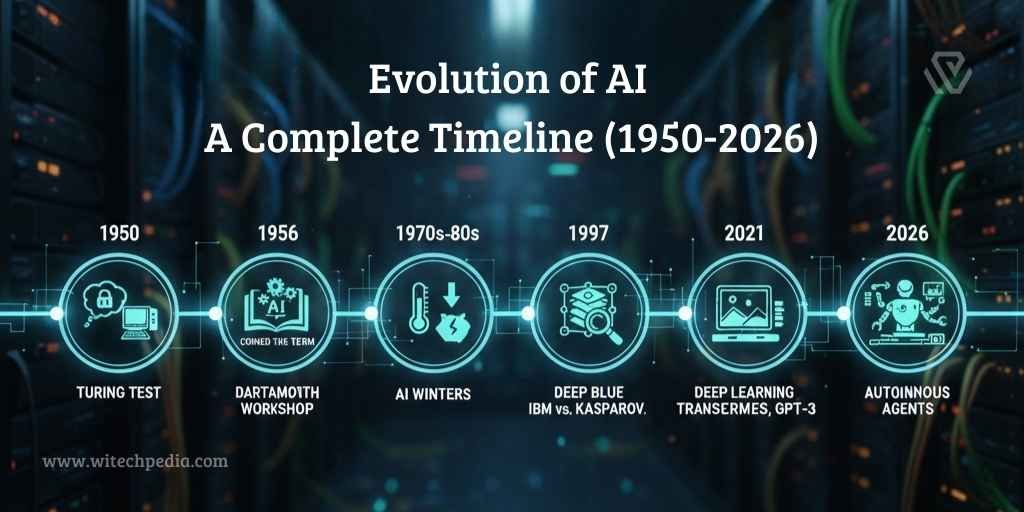
The story of AI begins with a simple question: “Can machines think?” In 1950, Alan Turing published his seminal paper, Computing Machinery and Intelligence, introducing the Turing Test.
The term “Artificial Intelligence” was later coined in 1956 at the Dartmouth Workshop, organized by John McCarthy. During this era, researchers believed that a machine with human-level intelligence was just a decade away—a hope that would soon face the harsh reality of hardware limitations.
The Rollercoaster Era: Golden Years and AI Winters
Following the initial hype, the 1970s and 1980s were marked by the “AI Winters.” Funding dried up as early systems failed to handle the complexity of real-world variables.
- Early Successes: ELIZA, a natural language processing program, showed that machines could mimic conversation.
- The Funding Freeze: Limitations in computational power led to a decline in interest, proving that ideas alone weren’t enough—we needed better hardware.
- Expert Systems: By the late 80s, AI found a niche in corporate environments through “Expert Systems” designed to solve specific problems within narrow domains.
The Data Explosion & The Rise of Machine Learning (1990–2010)
In 1997, IBM’s Deep Blue defeated world chess champion Garry Kasparov. This was a pivotal moment in the evolution of artificial intelligence, signaling a shift from rule-based logic to statistical learning.
The 2000s saw the birth of Big Data. As the internet grew, algorithms were fed massive amounts of information, leading to the rise of Machine Learning (ML). To understand the core mechanics of this transition, explore our guide on Machine Learning vs. Deep Learning.
The Deep Learning Revolution (2011–2020)
The 2010s were defined by Neural Networks. The breakthrough of AlexNet in 2012 proved that Deep Learning could outperform any other method in image recognition.
Soon, AI was in everyone’s pocket. Virtual assistants like Siri and Alexa became household names. By 2016, Google’s AlphaGo stunned the world by defeating Lee Sedol in the complex game of Go, demonstrating that AI could master intuition-based strategy.
The Era of Generative AI and Transformers (2021–2025)
The introduction of the Transformer architecture changed everything. It allowed AI to understand context on a massive scale, leading to the “Generative AI” boom.
For a deep dive into how these models work, check out our Beginner’s Guide to GenAI. In 2024 and 2025, we saw the rise of multimodal models like GPT-4o and the evolution of Google’s ecosystem. Read our Google Gemini Review (2026) to see how these models compare today.
2026 and Beyond: The Realities of Agentic AI
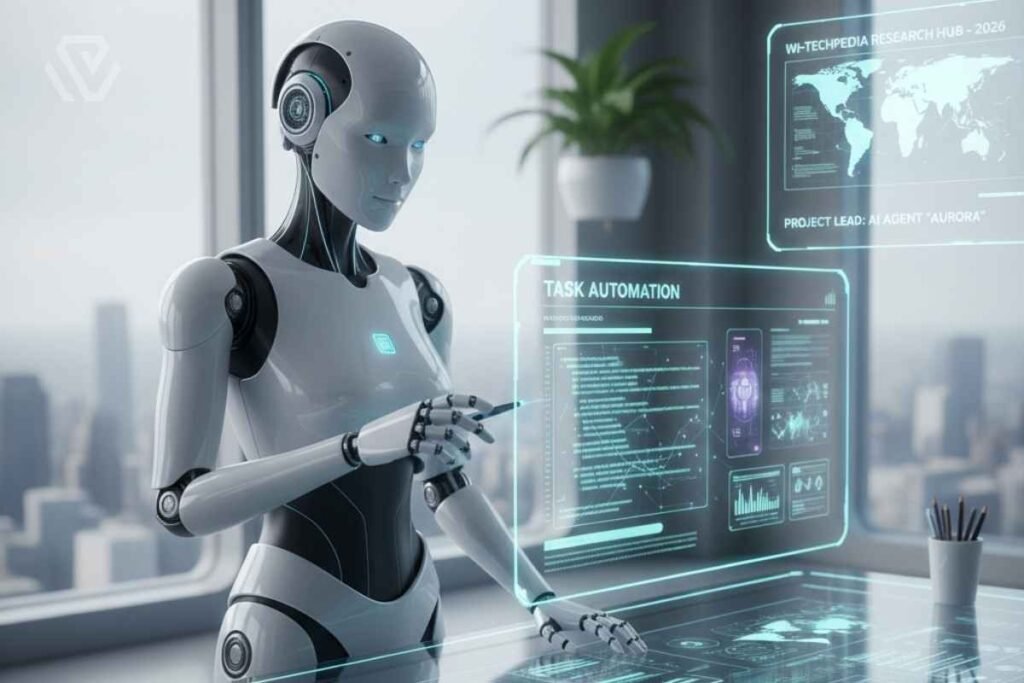
Today, in 2026, we have moved past simple chatbots. We are now in the age of Agentic AI.
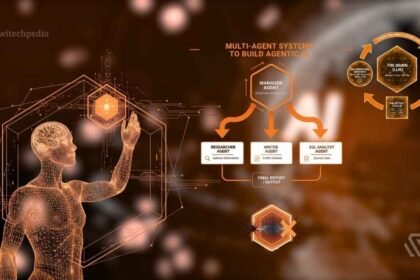
Unlike previous iterations that required constant prompting, current AI agents can take action—scheduling meetings, writing code, and managing workflows autonomously. We are also seeing the rise of Physical AI, where digital brains are finally integrated into real-world robotic bodies.
However, with great power comes responsibility. As AI evolves, so do the risks. It is essential to stay informed about AI Cybersecurity Threats to protect your digital assets in this new era.
FAQ: The Evolution of AI
Who is the father of Artificial Intelligence?
Alan Turing is considered the father of theoretical AI, while John McCarthy coined the term.
What is the difference between AI in 2022 and 2026?
2022 was the year of “Content Generation” (Generative AI). 2026 is the year of “Action” (Agentic AI), where systems perform tasks independently.