






Artificial Intelligence (AI) is the capability of a computational system to perform tasks traditionally associated with human intelligence, such as reasoning, learning, problem-solving, and decision-making. In 2026, AI has transitioned from a digital assistant to an Agentic partner, capable of not only generating content but executing complex multi-step workflows autonomously.
Core Definitions & Taxonomy
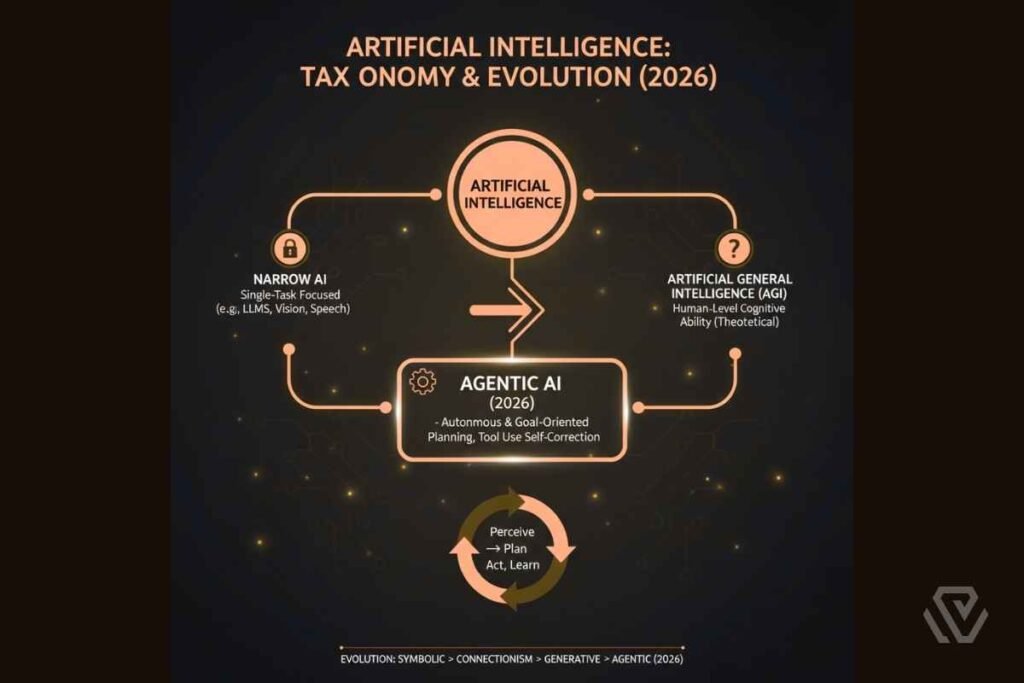
To understand AI in the modern era, it is essential to distinguish between its various forms and capabilities.
1. Narrow AI vs. General AI (AGI)
- Narrow AI (Weak AI): Systems designed to handle a specific task. All current AI in 2026, including Large Language Models, falls into this category.
- Artificial General Intelligence (AGI): A theoretical stage of AI evolution where a machine possesses the ability to understand and apply knowledge across any intellectual task at a human level. Organizations like OpenAI and Google DeepMind are currently leading the research into AGI safety.
2. Symbolic AI vs. Connectionism
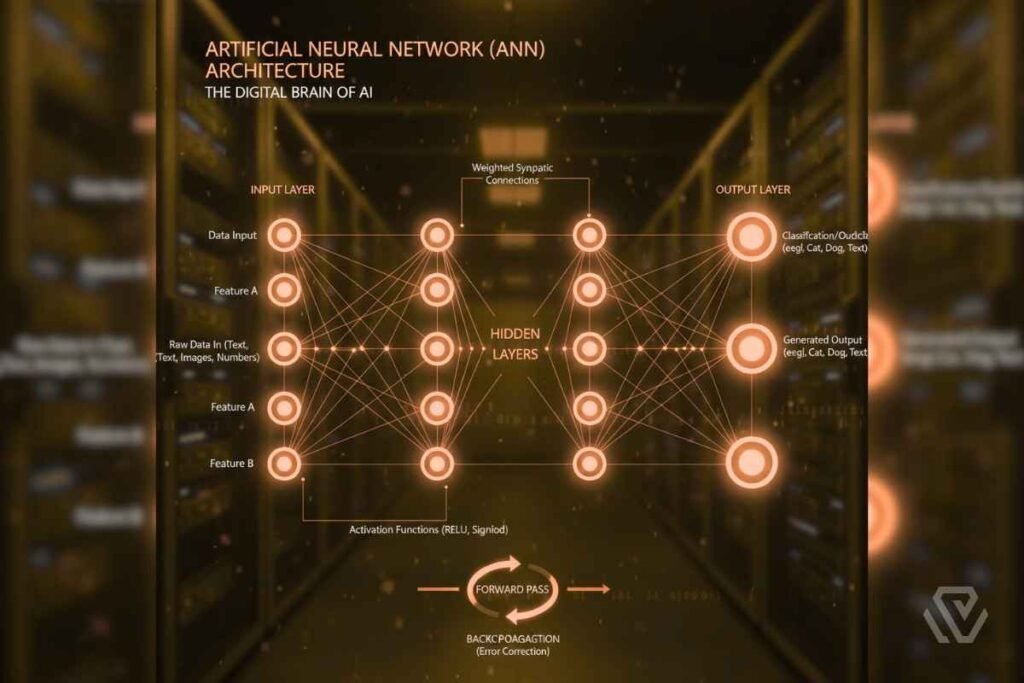
- Symbolic AI (GOFAI): Based on “if-then” logic and human-readable rules.
- Connectionism: The foundation of modern AI, utilizing Artificial Neural Networks inspired by biological structures. For a deeper look at the transition between these two, see our article on the Evolution of Artificial Intelligence.
3. Generative AI and Agentic Systems
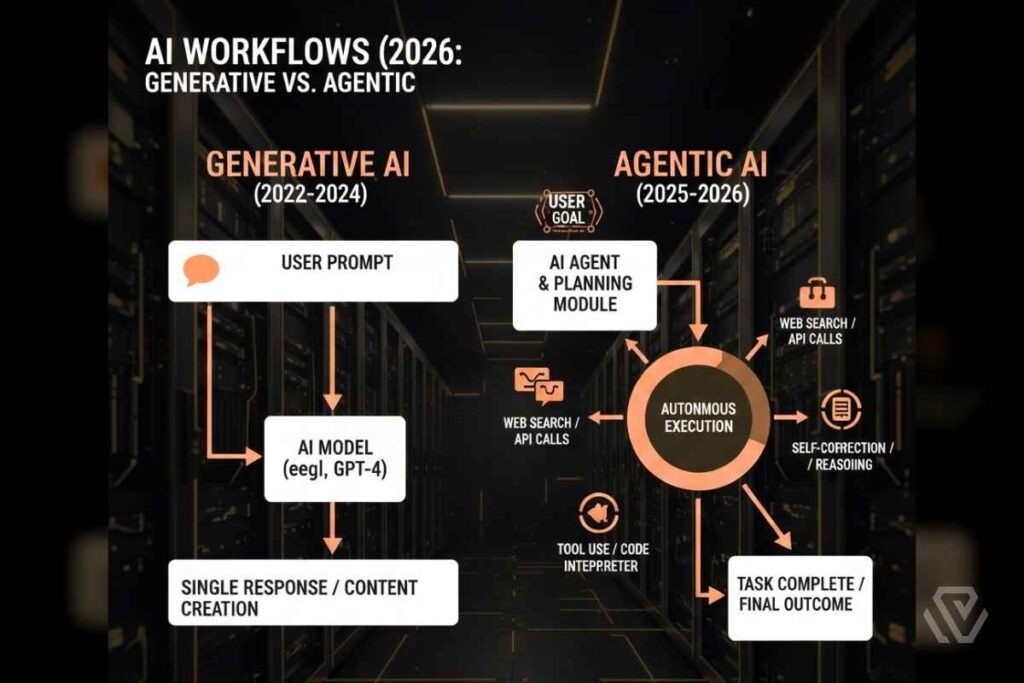
- Generative AI: Focuses on creating new content. Learn more in our Beginner’s Guide to GenAI.
- Agentic AI: The 2026 standard. These systems use reasoning to execute tasks using external tools without constant human prompting.
The History of AI: A Global Timeline
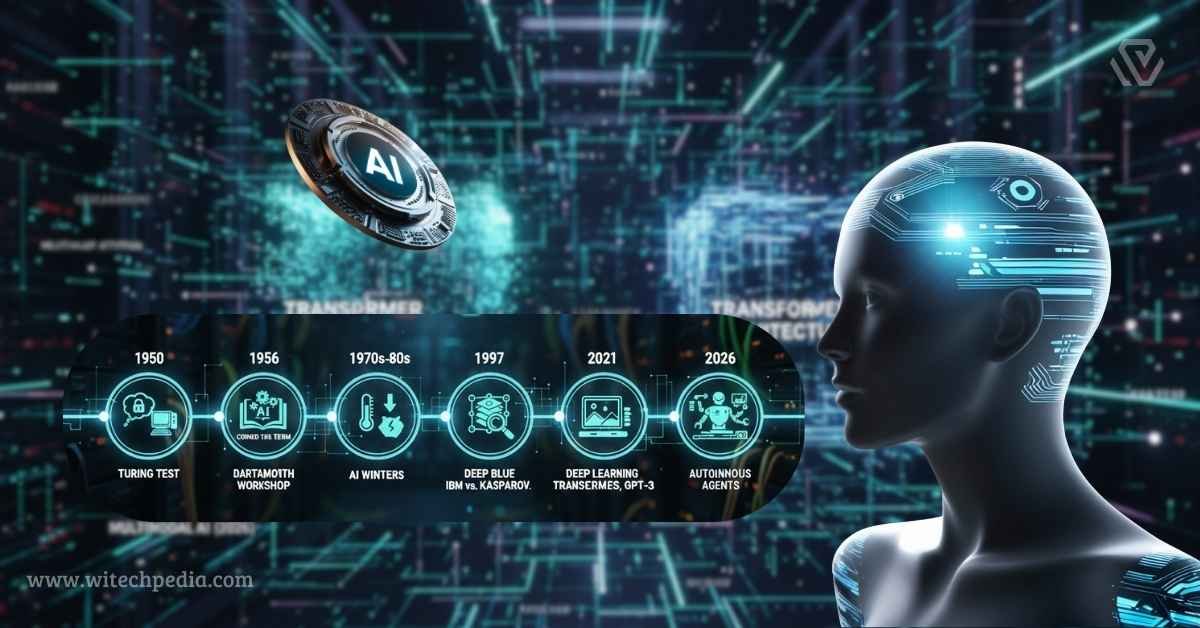
The evolution of AI is marked by cycles of intense innovation and “AI Winters” where funding stalled.
| Era | Key Milestone | Significance |
| 1950 | The Turing Test | Established the benchmark for machine intelligence. |
| 1956 | Dartmouth Workshop | Birth of AI as an official discipline. |
| 1997 | Deep Blue vs. Kasparov | Proved machines could master human strategy. |
| 2012 | AlexNet Breakthrough | Ignited the modern era of Deep Learning. |
| 2026 | Agentic AI Integration | AI becomes an autonomous worker. |
How AI Works: The Technical Foundation
Modern AI relies on three primary pillars: Data, Compute (GPUs), and Algorithms.
1. Machine Learning (ML)
The study of algorithms that improve automatically through experience. For a technical breakdown, view our guide on Machine Learning vs. Deep Learning.
- Supervised Learning: Training on labeled data.
- Reinforcement Learning (RL): Learning through trial and error, a method famously used by AlphaGo.
2. Transformer Architecture
Introduced in the landmark paper “Attention is All You Need”, the Transformer architecture is the “brain” behind 2026 models like GPT-5 and Gemini.
Key Applications in 2026
- Autonomous Agents: AI “workers” that can manage entire workflows.
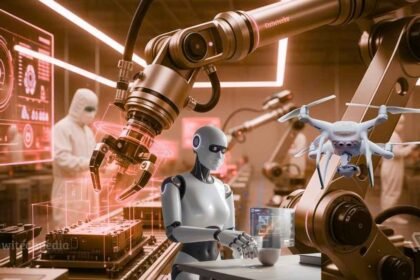
- Physical AI: The integration of digital brains into real-world robotic bodies. Read our full report on Physical AI Explained.
- Hyper-Personalized Healthcare: AI-driven drug discovery, accelerated by tools like AlphaFold.
Ethics, Safety, and Regulation
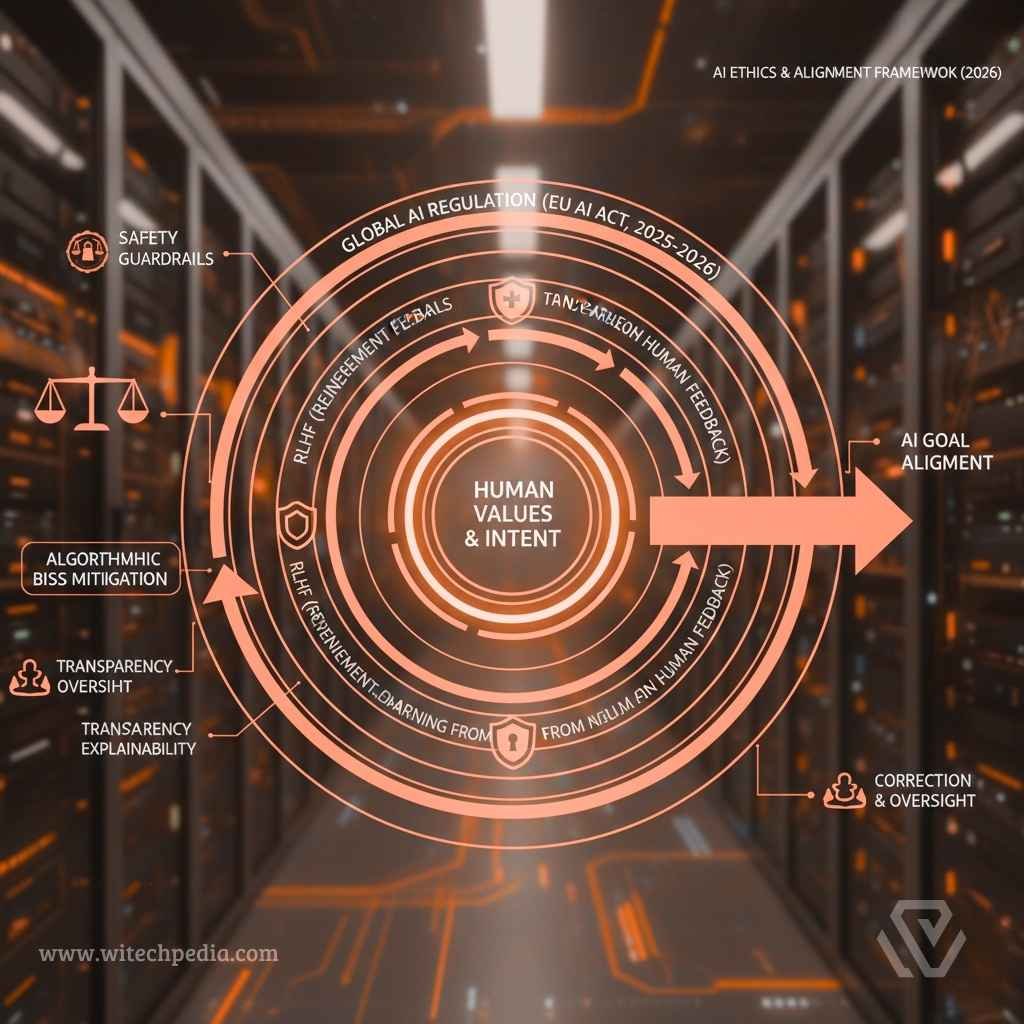
As AI capability nears AGI, the focus has shifted toward AI Alignment.
- Algorithmic Bias: The risk of AI inheriting human prejudices.
- Global Regulation: In 2026, frameworks like the EU AI Act govern the deployment of frontier models.
- Cybersecurity: Protecting AI from adversarial attacks. See our AI Cybersecurity Threats guide.
Frequently Asked Questions (FAQ)
What is the best definition of Artificial Intelligence?
AI is the simulation of human intelligence processes by machines, especially computer systems, including learning, reasoning, and self-correction.
How is AI different from Machine Learning?
AI is the broad concept of machines acting intelligently. Machine Learning is a specific subset of AI that focuses on the ability of machines to learn from data.