









Enhance your experience and support our site. Click "Accept" to consent to our Privacy and Cookie Policies.
Accept
WiTechPedia Main Logo Black Transparent WiTechPedia Main Logo White Transparent
  • Home
  • About Us
  • ServicesNew
  • Contact Us
  • Policies
    • Privacy Policy
    • Cookie Policy
    • Disclaimer
    • Copyright / Licensing Policy
    • Terms of Service
  • What’s NewHot
Notification
  • AI & ML
  • Cloud & Data
  • Cybersecurity
  • Tools
  • Programming & DevOps
  • Emerging Tech
  • Glossaries
  • Wikis
  • Guides
  • Reviews
  • Articles
  • Services
  • My Interests
  • My Saves
  • My Feed
  • My Bookmarks
  • My Account
Facebook Twitter Youtube Pinterest Linkedin
Personalize
WiTechPediaWiTechPedia
Font ResizerAa
  • Wikis
  • Guides
  • Reviews
  • Articles
  • Services
Search anything...
  • AI & ML
  • Cybersecurity
  • Programming & DevOps
  • Tech History & Glossaries
  • Cloud & Data
  • Hardware & Software
  • Emerging Tech

Follow @witechpedia on social media

FacebookLike
XFollow
PinterestPin
InstagramFollow
YoutubeSubscribe
LinkedInFollow

What's New at WiTechPedia

Explore More
A SOC analyst using the best prompts for cybersecurity incident reports to generate an automated executive summary.

Best Prompts for Cybersecurity Incident Reports (2026): NIST & ISO Compliant

Windows 11 26H1 Bromine platform architecture diagram optimized for Snapdragon X2 silicon

Windows 11 26H1 Requirements: Will Your PC Get the Update?

OpenClaw Review 2026: Self-Hosted AI Gateway Interface on Mac and Mobile

OpenClaw Review 2026: The Ultimate Privacy-First AI Gateway?

4.7 out of 5
A USB flash drive inserted into a MacBook Pro M5 for a clean macOS installation.

How to Install macOS: The Ultimate Guide (Clean Install, Recovery & USB)

Have an existing account? Sign In
Follow US
© 2026 WiTechPedia | All Right Received | Managed by @antoniopartha
WiTechPedia > What’s New > Cybersecurity > AI Cybersecurity Threats & Defenses in 2026: The Ultimate Guide
Cybersecurity

AI Cybersecurity Threats & Defenses in 2026: The Ultimate Guide

Navigate 2026’s AI cybersecurity threats like deepfakes and automated attacks. Learn the best AI defense mechanisms and cybersecurity strategies to protect your data.

witechpedia
Last updated: February 2, 2026 5:52 PM
By
witechpedia
Bywitechpedia
Follow:
No Comments
Share
6 Min Read
A futuristic digital shield protecting a server network from red AI Cybersecurity Threats in 2026
In 2026, proactive AI defense mechanisms are the only way to safeguard critical infrastructure against automated, evolving threats.
SHARE

In 2026, the digital landscape has shifted from a battle of human wits to an AI-driven arms race. While artificial intelligence has revolutionized productivity, it has simultaneously equipped threat actors with automated, scalable, and highly sophisticated tools. For businesses and security professionals, understanding AI cybersecurity threats 2026 is no longer optional—it is the foundation of digital survival.

Table of Contents
  • Emerging AI Cybersecurity Threats: The Rise of Automated Attacks
  • Targeted AI System Vulnerabilities: Data Poisoning and Noise
  • Effective AI Defense Mechanisms: Turning AI into a Shield
  • 2026 Case Study: Thwarting a Deepfake CEO Fraud
  • Implementation Guide: Deploying AI Cybersecurity Strategies
  • Frequently Asked Questions (FAQ)

In this guide, we break down the most dangerous AI-powered attacks and the proactive cybersecurity strategies required to defend against them.

A futuristic digital shield protecting a network from AI-driven cyber threats and glowing code fragments
The cybersecurity landscape in 2026 is defined by a constant battle between AI-driven attackers and intelligent defense systems.

Emerging AI Cybersecurity Threats: The Rise of Automated Attacks

The era of “obvious” phishing emails is over. Today’s attackers leverage Large Language Models (LLMs) and generative media to bypass traditional filters.
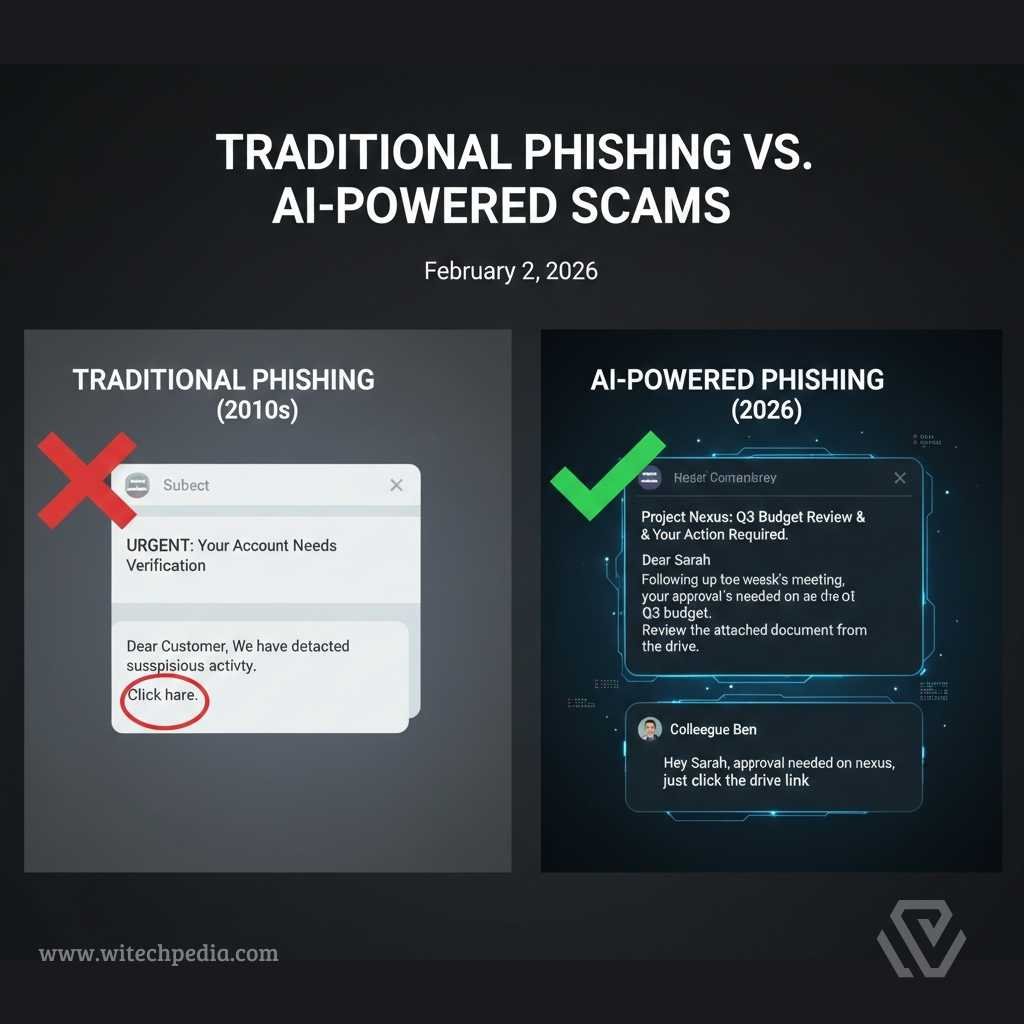
Infographic comparing a generic traditional phishing email with a hyper-personalized AI-generated phishing attack
AI allows attackers to scale personalization, making modern phishing attempts nearly indistinguishable from legitimate corporate communications.

1. AI-Powered Phishing and Generative Scams

Modern AI-powered phishing campaigns use real-time data scraping to craft hyper-personalized messages. These LLMs mimic a company’s internal tone and reference actual recent projects. According to recent Google Cloud Cybersecurity Forecasts, AI-enhanced social engineering has seen a 40% higher success rate than traditional methods.

2. Deepfake Phishing and Social Engineering

The most alarming trend in 2026 is the use of real-time voice and video cloning. Attackers now impersonate C-suite executives during live video calls. As we noted in our Google Gemini Review (2026), while LLMs are incredible tools for creativity, their ability to generate synthetic media makes them a primary driver of AI cybersecurity threats.

3. Automated Malware Evolution

We are seeing the rise of polymorphic AI malware. This code uses embedded machine learning to analyze the victim’s environment and rewrite its own signature in real-time. This allows it to slip past traditional antivirus software that relies on static databases.

Targeted AI System Vulnerabilities: Data Poisoning and Noise

It isn’t just that attackers use AI; they are also targeting the AI models that businesses rely on, creating unique vulnerabilities in AI systems.

  • Data Poisoning: By injecting malicious data into a company’s training set, hackers create “blind spots” in security models. The NIST AI Risk Management Framework highlights this as a critical concern for firms.
  • Adversarial AI Attacks: Hackers can add invisible “digital noise” to files. To a human, the file looks normal, but to a security AI, the noise triggers a misclassification, allowing malware to be labeled as “safe.”

Effective AI Defense Mechanisms: Turning AI into a Shield

To counter these threats, organizations must move away from reactive “firewall” thinking and toward proactive AI defense mechanisms.

1. AI Threat Detection and Anomaly Analysis

Instead of looking for known viruses, Machine Learning for threat detection now focuses on behavior. AI manages this at scale across complex Internet of Things (IoT) networks, identifying compromised devices before they can infect the main server.
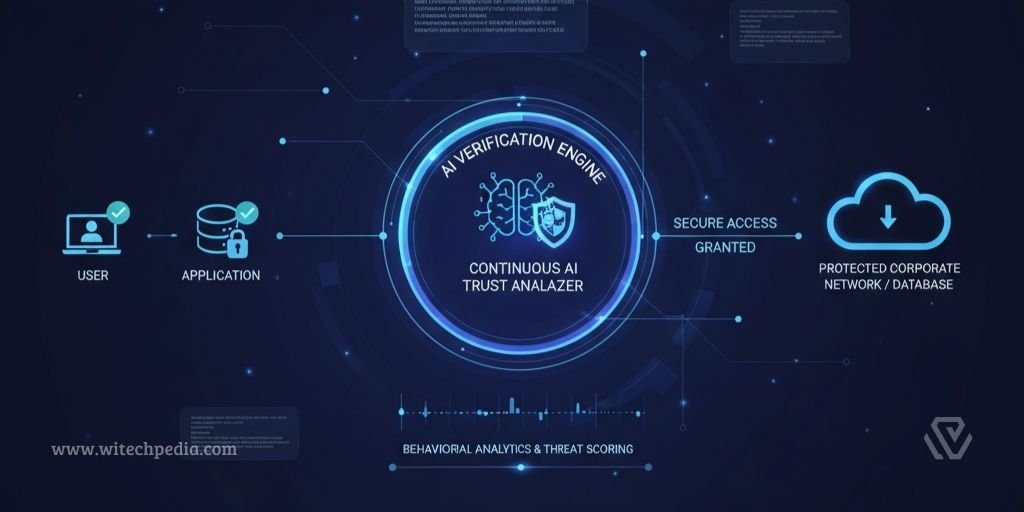
Technical diagram of a Zero-Trust security model using AI for continuous identity and behavior verification
In a Zero-Trust AI architecture, trust is never assumed; every request is verified based on real-time behavioral data.

2. Cybersecurity Strategies 2026: Zero-Trust and AI

In 2026, the mantra is “Never Trust, Always Verify.” A Zero-Trust AI architecture—built on standards like NIST SP 800-207—continuously authenticates every user. If a system failure occurs, manual intervention using essential CMD commands remains a vital fallback for recovery.

3. Quantum-Safe Data Protection in the AI Era

As we move closer to the “Q-Day” threat to encryption, AI is being used to manage the transition to post-quantum cryptography. You can learn more about this in our deep dive into Quantum Computing in 2026.

2026 Case Study: Thwarting a Deepfake CEO Fraud

In early 2026, a major financial institution was targeted by a “vishing” (voice phishing) attack. An attacker used a high-fidelity AI voice clone of the CFO to request an emergency $5 million transfer.
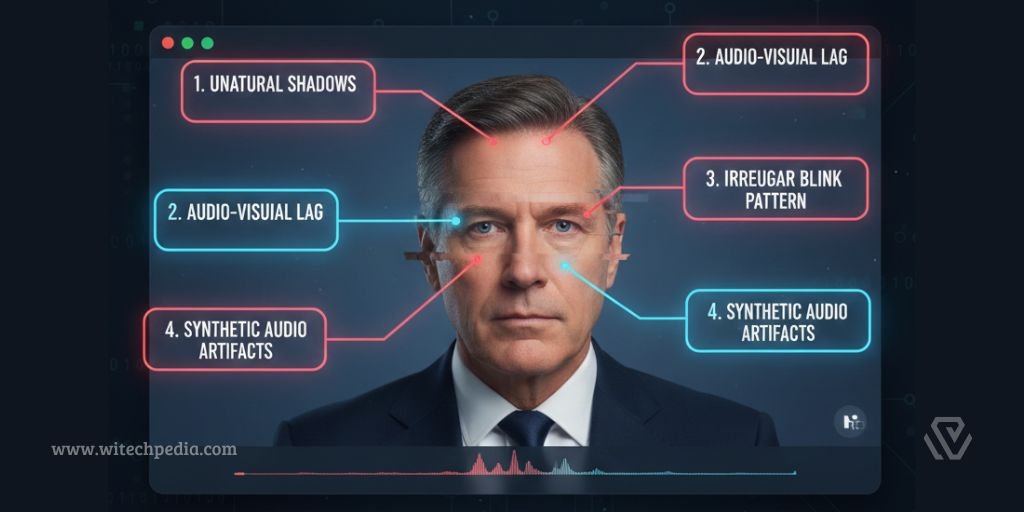
Visual guide highlighting the red flags of an AI-generated deepfake video call, such as unnatural lighting and syncing errors
Even the most advanced deepfakes in 2026 often leave subtle digital “artifacts” that AI detection tools can identify.

The Defense: The bank’s AI-driven communication tool detected “synthetic artifacts” in the audio—micro-frequencies that the human ear cannot hear. The system flagged the call, triggered a secondary biometric check, and thwarted the theft.

Implementation Guide: Deploying AI Cybersecurity Strategies

  1. Risk Assessment: Audit your current AI dependencies and potential AI cybersecurity threats.
  2. Deploy AI-Driven Firewalls: Invest in tools that offer real-time anomaly detection.
  3. Staff Training: Educate employees on the existence of video and voice deepfakes.
  4. Continuous Monitoring: Use analytics to track your data protection AI health.

Frequently Asked Questions (FAQ)

What are the biggest AI cybersecurity threats for small businesses?

Small businesses are primary targets for automated phishing and ransomware that uses AI to find unpatched vulnerabilities faster than a human could.

How do AI defense mechanisms work to improve response times?

AI can analyze millions of data points per second, identifying and isolating a breach in milliseconds—tasks that would take a human security team hours.

What are the best cybersecurity strategies for 2026?

Focus on proactive AI integration, zero-trust architecture, and employee education regarding deepfake technology.


Sign Up For Weekly Newsletter

Be keep up! Get the latest Technology Updates, delivered straight to your inbox.
By signing up, you agree to our Terms of Use and acknowledge the data practices in our Privacy Policy. You may unsubscribe at any time.
Share This Article
Facebook Copy Link Print
What do you think?
Love0
Sad0
Happy0
Sleepy0
Angry0
Wink0
Leave a Comment Leave a Comment

Leave a Reply Cancel reply

Your email address will not be published. Required fields are marked *

Sign Up for Our Newsletter

Subscribe to our newsletter to get our newest articles instantly!

What's New at WiTechPedia

A SOC analyst using the best prompts for cybersecurity incident reports to generate an automated executive summary.
Best Prompts for Cybersecurity Incident Reports (2026): NIST & ISO Compliant
Data Privacy
A tech professional at a dual-monitor setup using the best chatgpt prompts to automate coding and productivity tasks.
100+ Best ChatGPT Prompts for Tech Professionals & Developers (2026)
Generative AI
Best Prompts for Debugging Code 2026 guide featuring a split screen of a frustrated developer and a clean, bug-free AI code solution.
Fix Bugs Fast: Best Prompts for Debugging Python, JS & C++
DevOps & Tools
Best free VPN services of 2026 comparison collage featuring PrivadoVPN, Proton VPN, and Windscribe logos on a secure shield background.
Best Free VPN in 2026: Top 5 Safe & Unlimited Options (Tested)
Data Privacy

Stay Connected

You may also like

Uncover the stories that related to the post!

Preemptive Cybersecurity in 2026: Safeguarding AI-Driven Worlds

Quantum Computing in 2026: Revolutionizing AI and Data Security

Illustration of Best AI Tools in 2026 for Productivity, Creativity, and More
AI & MLHardware & Software

Best AI Tools in 2026: Top Picks for Productivity, Creativity, and More

Vibrant AI-generated illustration of a futuristic city with flying cars and sunset hues, representing generative AI creativity
Generative AI

What is Generative AI? A Beginner’s Guide to GenAI Explained

A comprehensive infographic showing the evolution of artificial intelligence from the 1950 Turing Test to 2026 Agentic AI realities.
AI & MLTech History & Glossaries

The Evolution of Artificial Intelligence: From Turing to 2026 Realities

Best Midjourney Prompts 2026 guide featuring a split-screen comparison of hyper-realistic photography and vector logo design created with V6.
Generative AI

Best Midjourney Prompts in 2026: The Ultimate Copy-Paste Guide (V6 & V7)

Best Claude AI prompts for writing transformation showing a messy draft turning into a polished blog post using Claude 3.5 Sonnet.
AI & MLProgramming & DevOps

10 Best Claude AI Prompts for Writing & Copy (2026 Guide)

Diagram showing What is a VPN creating an encrypted tunnel between a user's laptop and the internet to secure data.
Cybersecurity

What is a VPN? The Complete Technical Encyclopedia

Show More
WiTechPedia Main Logo Black Transparent WiTechPedia Main Logo White Transparent

Explore WiTechPedia, The free technology encyclopedia packed with wikis, guides, tools, reviews, & articles on AI & ML, Cloud & Data, Cybersecurity, Programming, Hardware & Software, History & Glossaries. Unlock knowledge today!

  • Important links:
  • Privacy Policy
  • Cookie Policy
  • Copyright
  • Terms of Service

Quick Links

  • AI & ML
  • Cloud & Data
  • Cybersecurity
  • Tools
  • Programming & DevOps
  • Emerging Tech
  • Glossaries

About Us

  • About Us
  • Contact Us
  • ServicesNew
  • Wikis
  • Reviews
  • Guides
Facebook Twitter Youtube Pinterest Linkedin

© 2026 WiTechPedia | All Right Received | Managed by @antoniopartha

WiTechPedia Popup image black
Join WiTechPedia!
Subscribe to our newsletter and never miss our latest Technology related Wikis, Guides, Reviews, Articles, Tools & More for FREE...
Zero spam, Unsubscribe at any time.
WiTechPedia - The FREE Technology Encyclopedia WiTechPedia - The FREE Technology Encyclopedia
Welcome Back!

Sign in to your account

Username or Email Address
Password

Lost your password?

Not a member? Sign Up